API Groups
/20
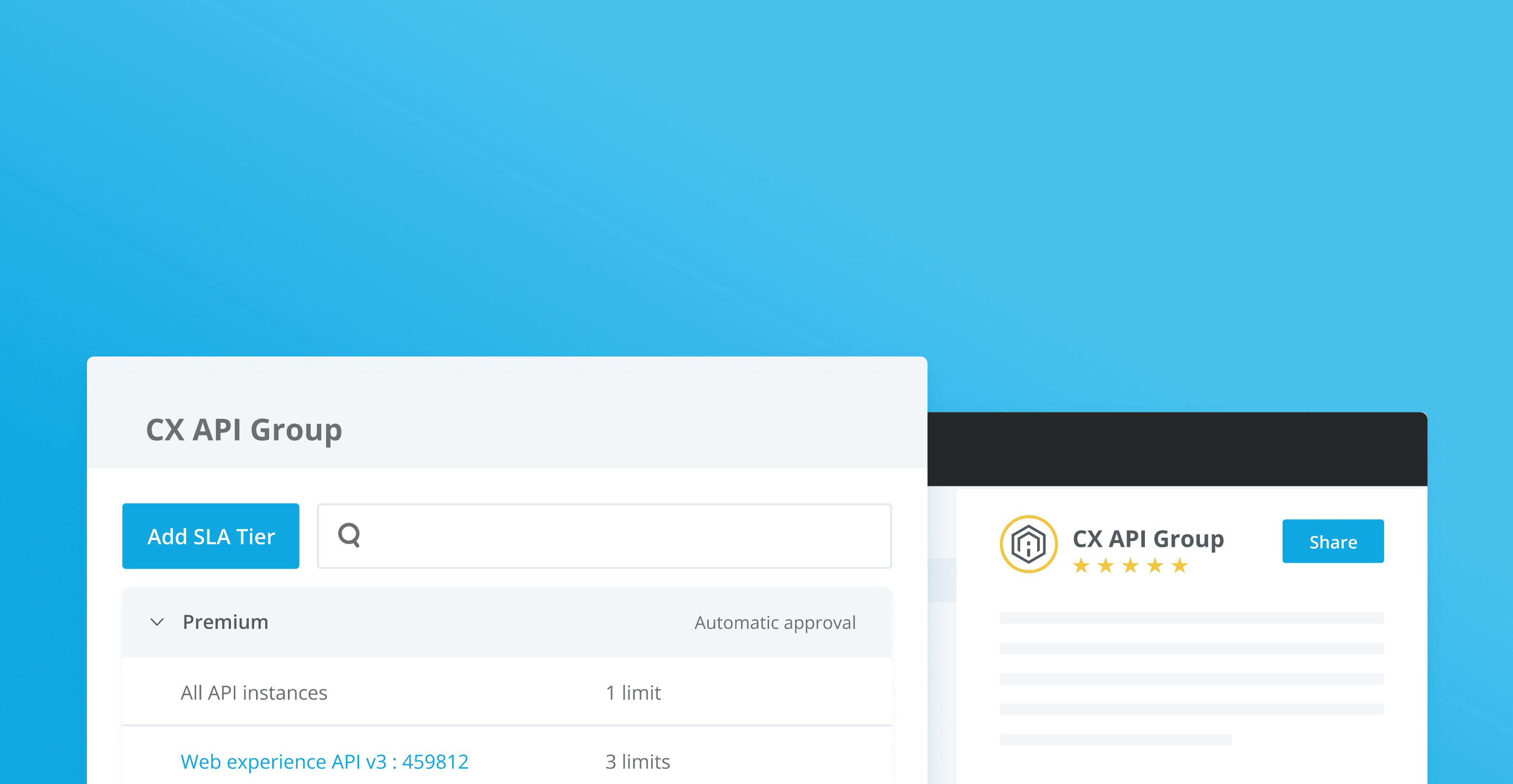
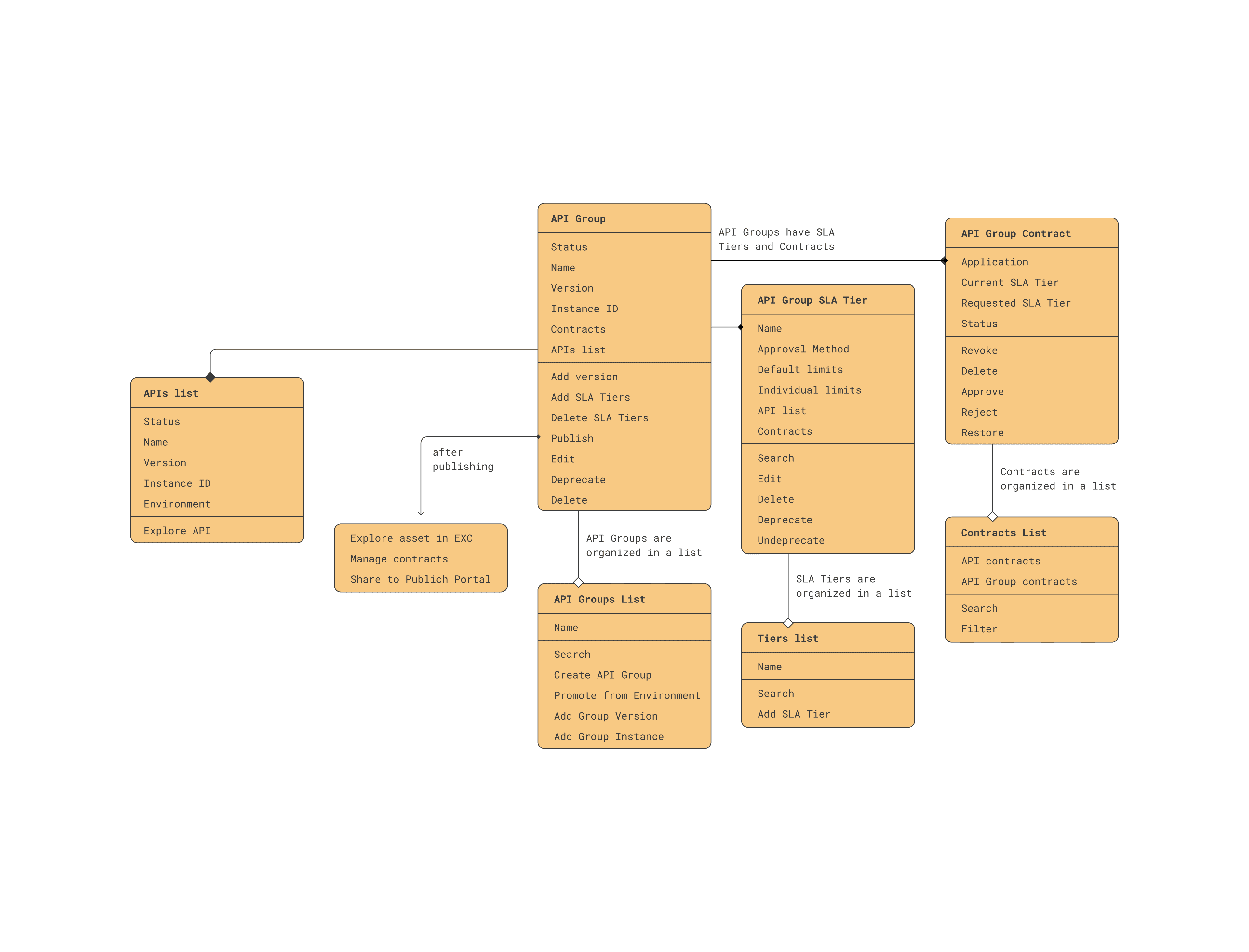
Back in the days, Mulesoft lacked a solution for managing APIs at a scale: developers in charge of dozens of APIs had to set up the policies, permissions and documentation one by one, making the process unnecessarily complex and time-consuming. To fix this we created the API Groups Framework: the goal was to streamline workflows by symplifying how APIs are managed and shared.
The problem
Managing multiple APIs for a single project felt chaotic. Developers struggled with inefficiencies, while API consumers at a scale had to juggle too many tabs to find the right configurations or documentations. The lack of a centralized approach made collaboration harder and slowed everyone down.
What we set out to achieve
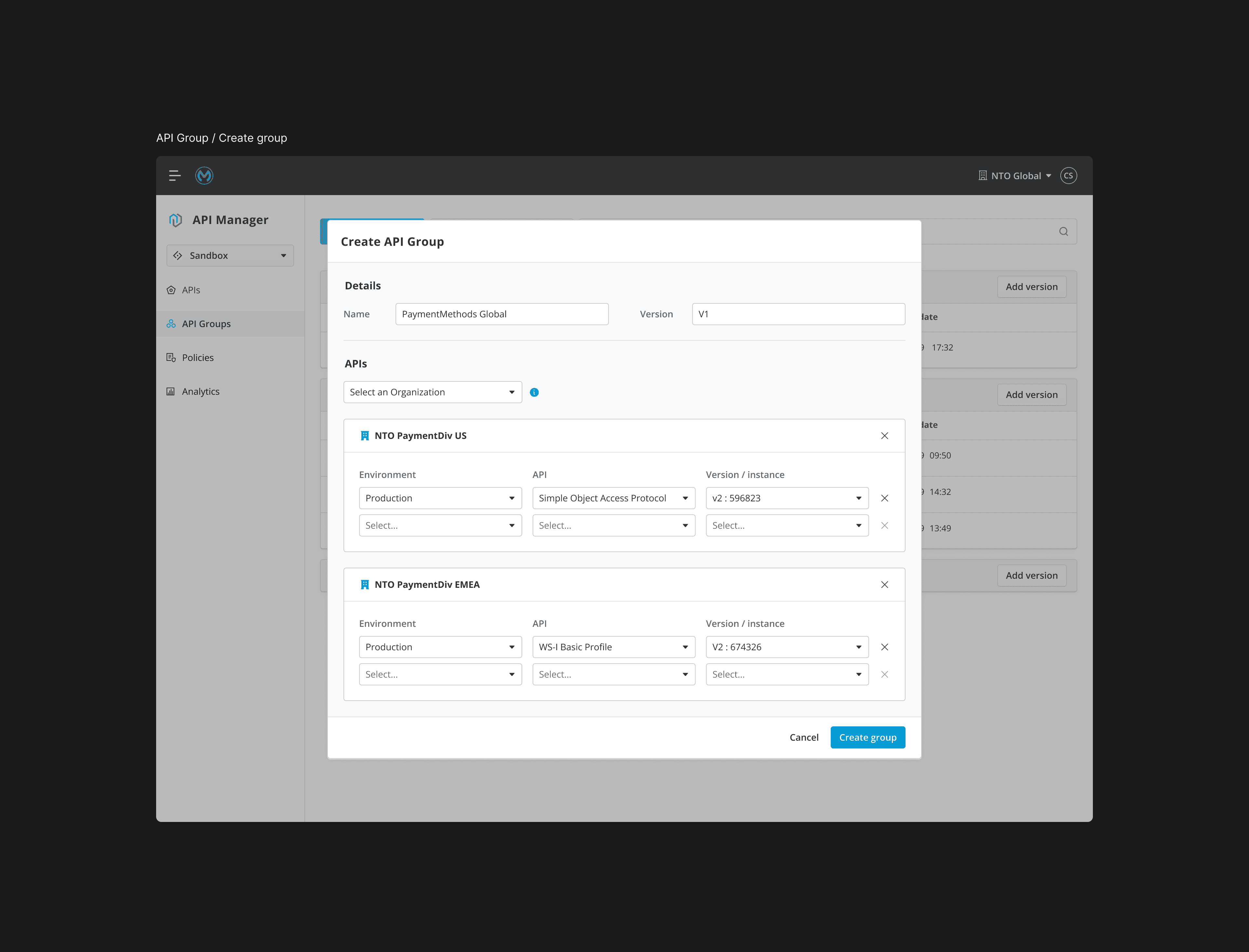
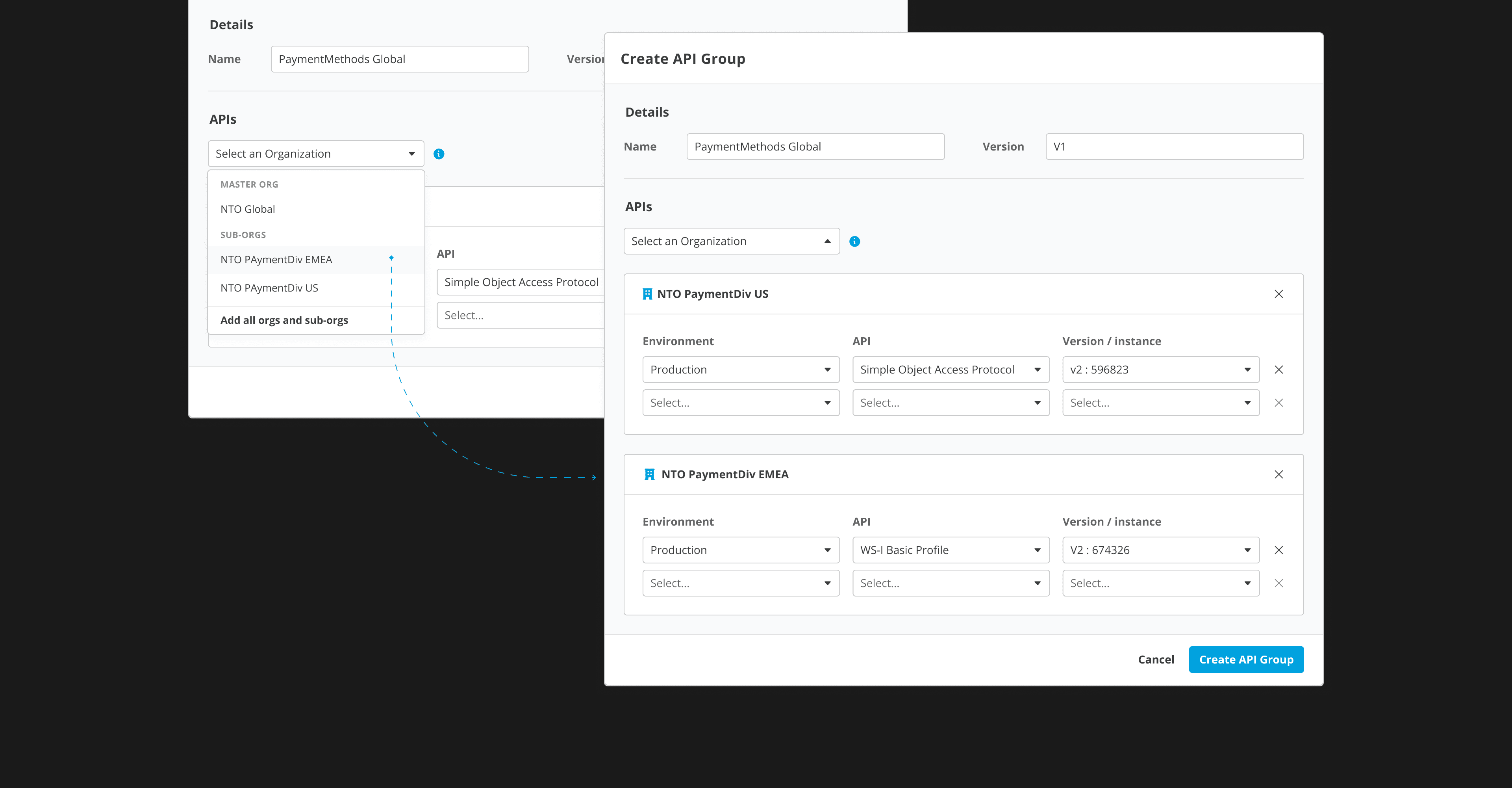
Simplify API management by enabling users to group related APIs into a single object.
Make it easy for API consumers to find the right documentation and settings in one place.
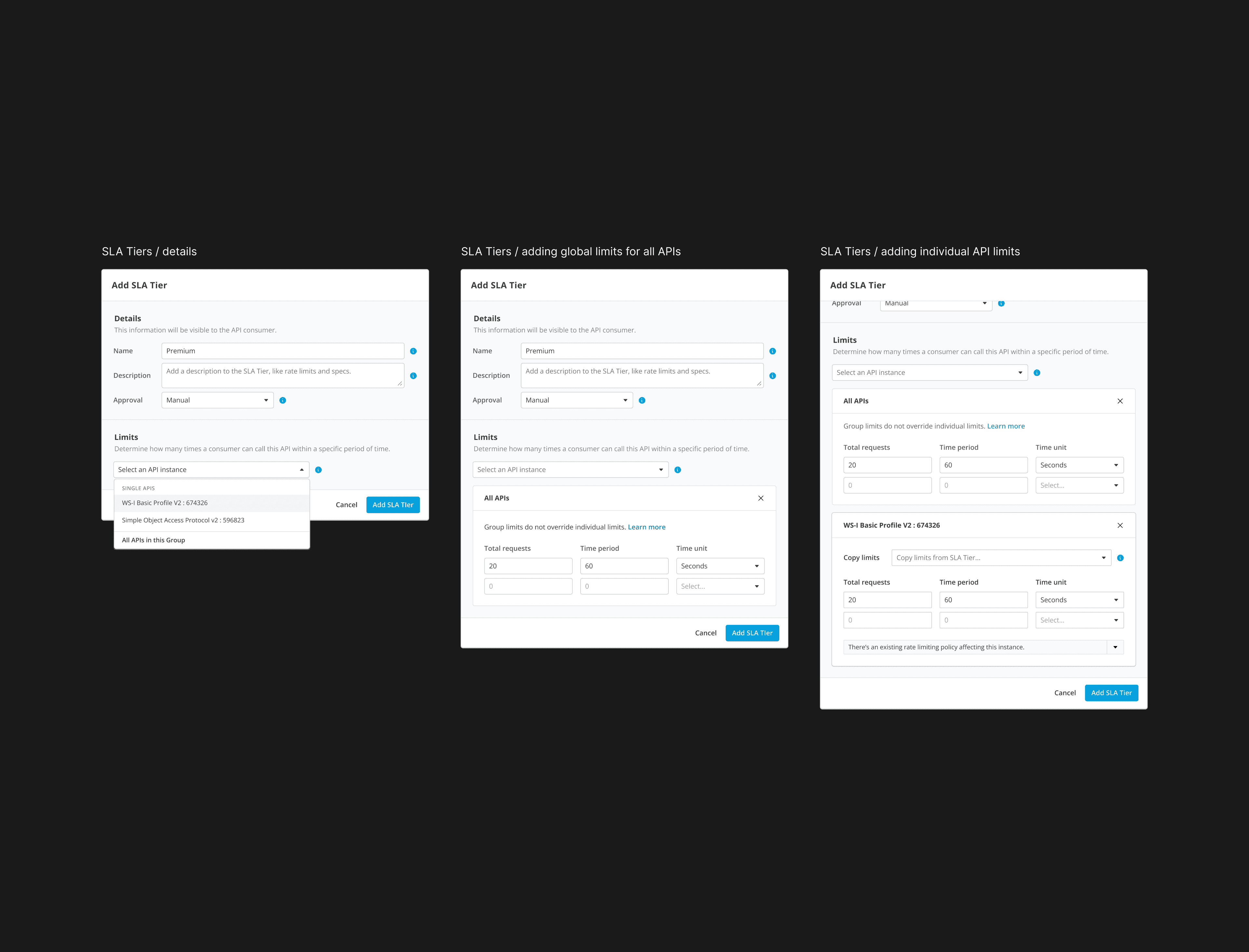
Provide a way to handle SLA (Service Level Agreement) tiers for both bulk and individual APIs without a headache.
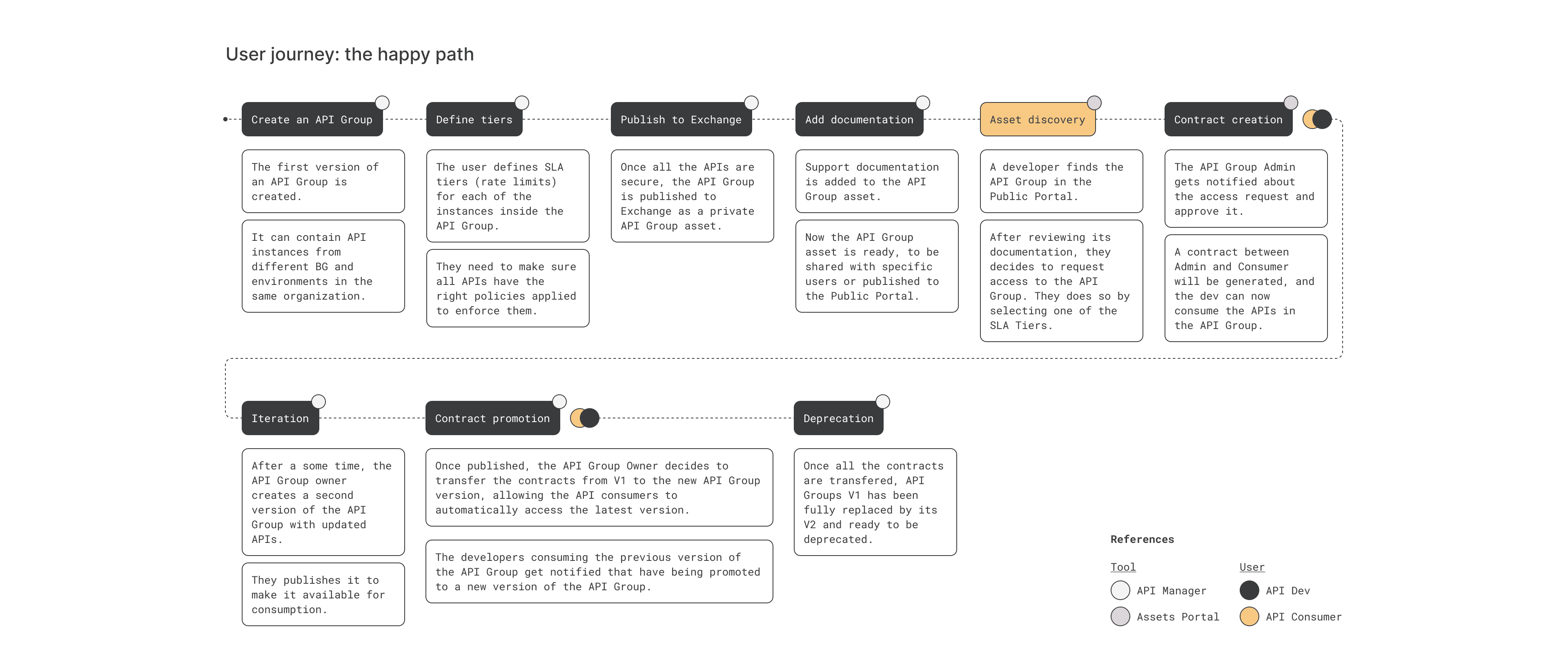
Diving into the research
Collaboration across teams. Partnered with Pre-Sales and Services teams to gather diverse feedback and align the solution with business goals.
Benchmarking the industry. Took a close look at how others in the space were tackling API management and identified opportunities to raise the bar.
Talking to users. We ran usability tests (both moderated and unmoderated) to uncover pain points and ensure we were addressing real user needs.
Key insights
Bulk actions were a huge time-saver, but users still needed the ability to tweak individual APIs when necessary.
There was a significant knowledge gap around API grouping and SLA tiers, leading to errors and confusion.
Users craved clear, in-context guidance to help them get started autonomously, eliminating the need for assistance from our Support or CX teams.
During usability tests, 80% of users said bulk-action capabilities were a top priority, even if it added some complexity—a major validation of our design direction.
How we solved it
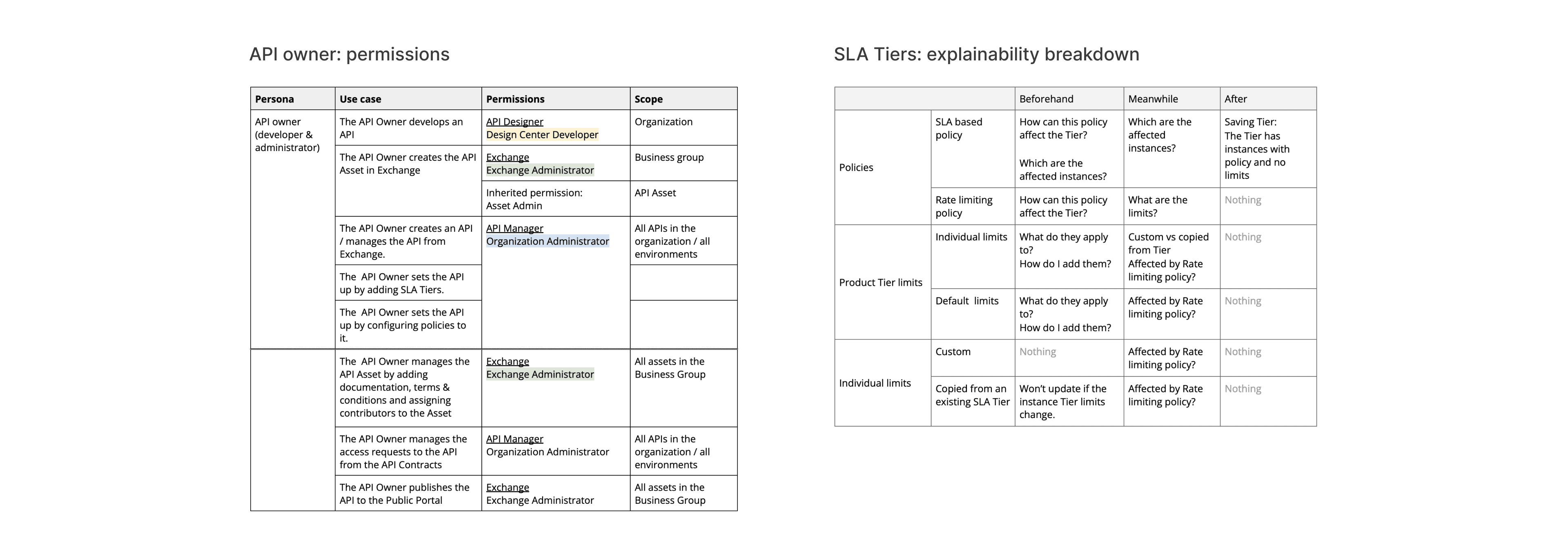
Redesigned Permissions. Introduced a new “API Group Owner” role, allowing secure grouping across environments and fostering better teamwork.
Streamlined SLA Management. Built bulk-action tools with step-by-step guidance to make configuration simple and efficient.
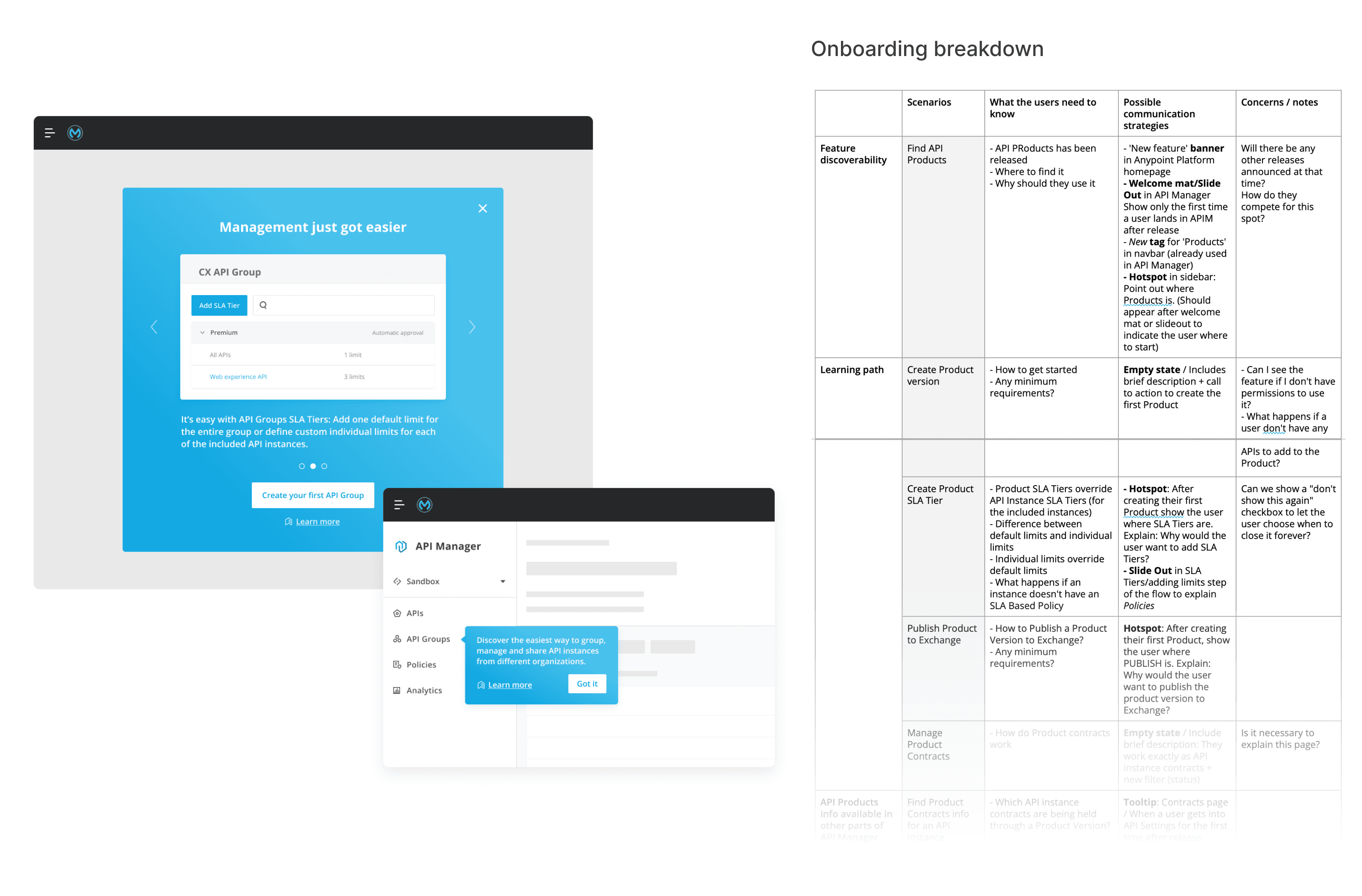
Enhanced Onboarding. Designed interactive, Appcues-powered tutorials to walk first-time users through the system with ease.
The impact
Adoption Rates → Within three months of launch, users adopted the feature organically, with many creating additional API groups in their first week. Task completion times improved by 55%.
Seamless Onboarding →This was our first cross-platform onboarding framework, and it became the gold standard for future feature launches.
Improved Teamwork → We introduced a UX sign-off process and heuristic evaluations, which improved collaboration and set a higher standard for design quality.