Dynamic Job Architecture
/23
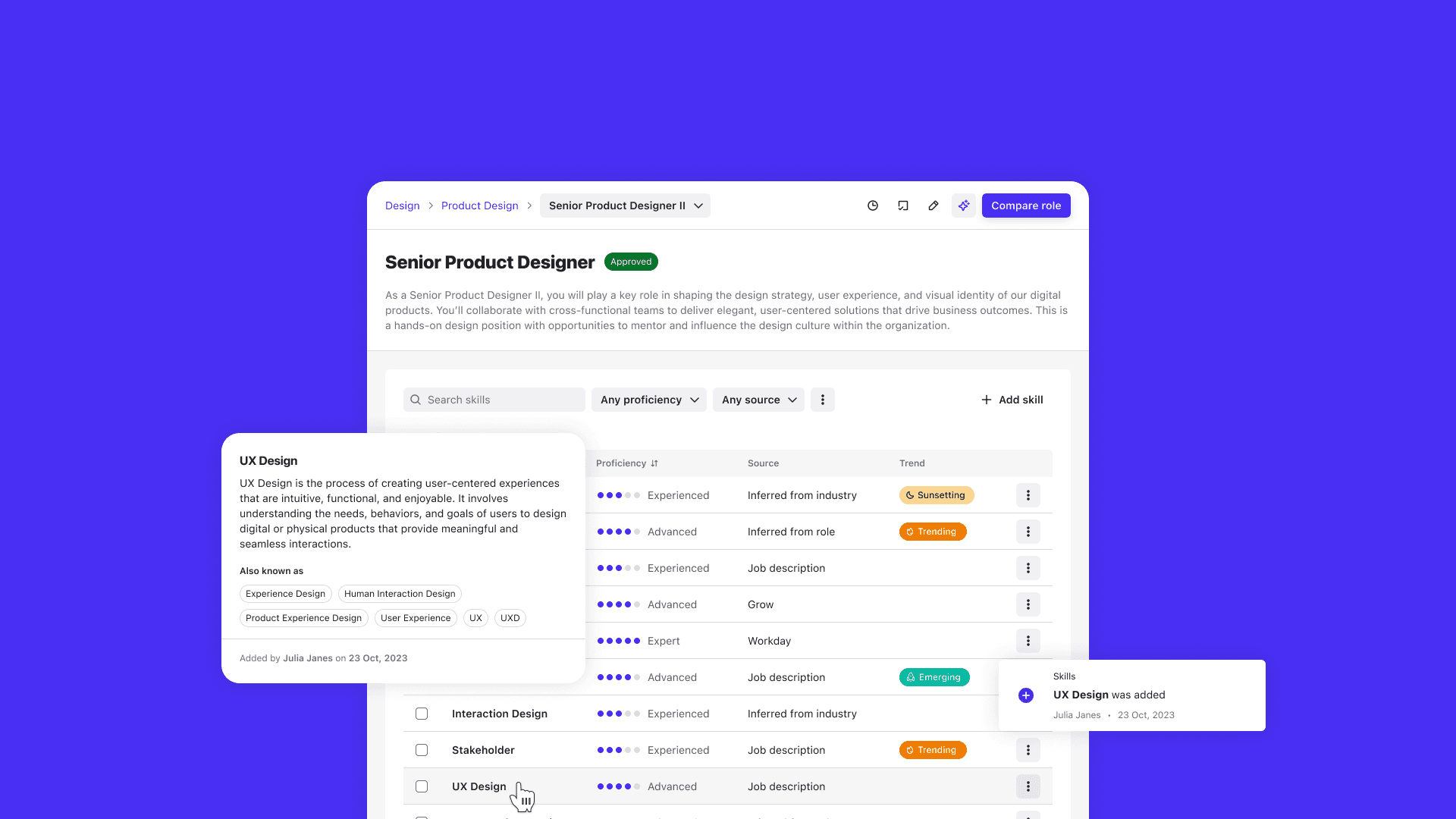
In 2024, Beamery set out to build the leading workforce management platform in the HR market. We began with a job architecture management solution, validating the Proof of Concept and delivering the MVP in just 5 months. Our goal was to take it from 0 to 1 quickly, beta test early, and iterate on the go—while laying a strong foundation for future growth. Here’s how I approached the design process to make it happen.
From Vision to Action
The labor market is evolving faster than ever and it's becoming more and more challenging for HR teams to stay ahead. Reactive decision-making often results in costly outcomes, from losing valuable talent to widening skill gaps. That's the problem we are trying to address.
The idea of a workforce management platform had been on the radar of Product Directors and C-suite Executives for some time. The market opportunity was clear, supported by emerging trends and insights from client conversations. Once our AI engines were ready to take on the challenge, we kicked off the project. Our first step was to gather all the scattered information—part of it never formally documented. To do this, we partnered with a UX researcher to piece everything together.
Conducted deep-dive sessions with the CPO, CEO, Product Directors, and Recruiting Strategists.
Reviewed past interviews with HR executives and advisors.
Performed a comprehensive competitor analysis to understand the market landscape.
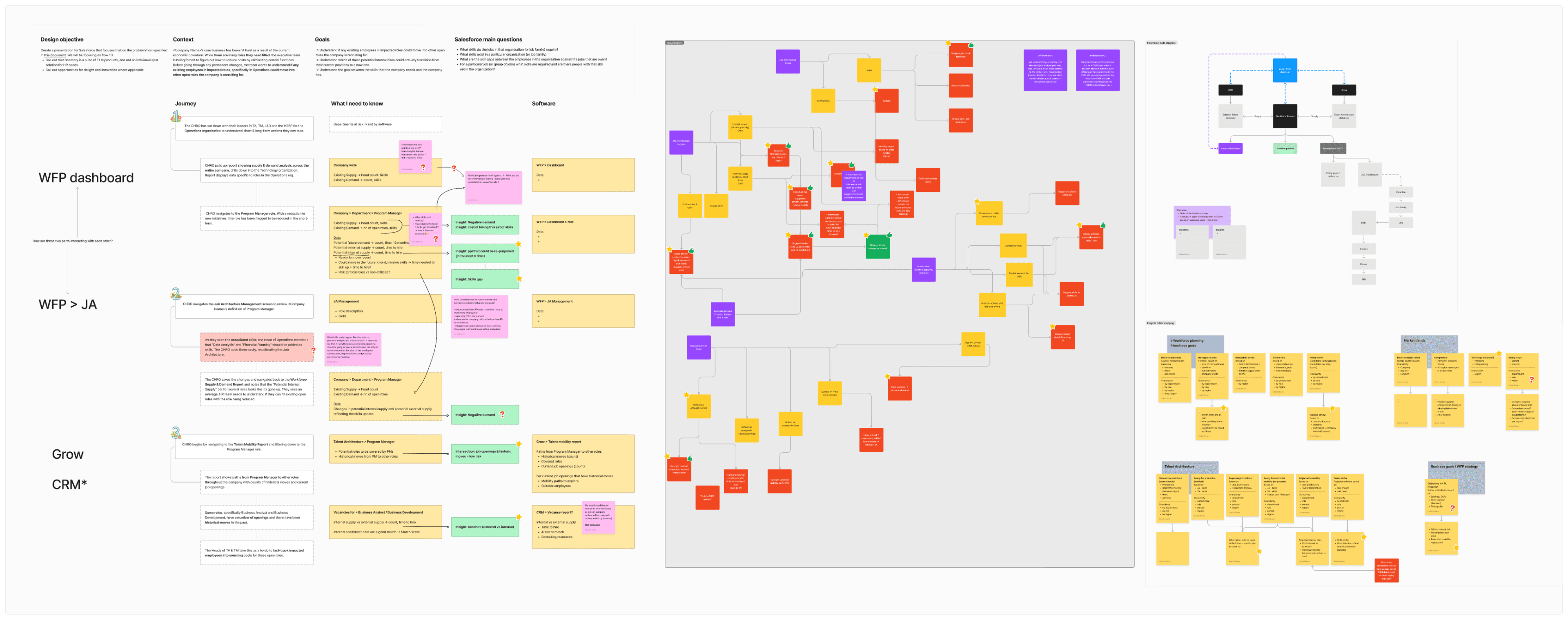
What alignment looked like 🥹
Key insights
User needs
Data centralization. Fragmented systems made it impossible to maintain a reliable single-source-of-truth for job data.
Cross-team collaboration. Commonly used tools like Google Sheets didn’t support large-scale HR workflows, resulting in duplication and inefficiencies.
Guidance and automation. Manual processes consumed significant time and energy, preventing HR teams from focusing on strategic, high-value activities.
Market opportunity
84% of leaders now prioritize a skills-first approach to maximize workforce potential.
Our competitors don't offer solid internal and market data integrations, leaving a gap in the strategic planning front.
Business opportunities
Capture revenue by addressing a critical market demand.
Boost net retention by delivering continuous value to customers.
Enhance the value of existing tools through integrated, skills-based solutions.
Archetype personas
Workforce Strategist
C-level executive shaping HR strategy and aligning it with business goals. Defines global talent strategies, workforce planning, and diversity initiatives, while reporting to the board.
People Manager
Bridges the Strategist’s vision with operational execution. Oversees regional HR decisions, workforce composition, and budgets, reporting quarterly to the Strategist.
Collaborator
Line manager or department head managing role definitions, skills, career plans, and hiring processes in alignment with business needs.
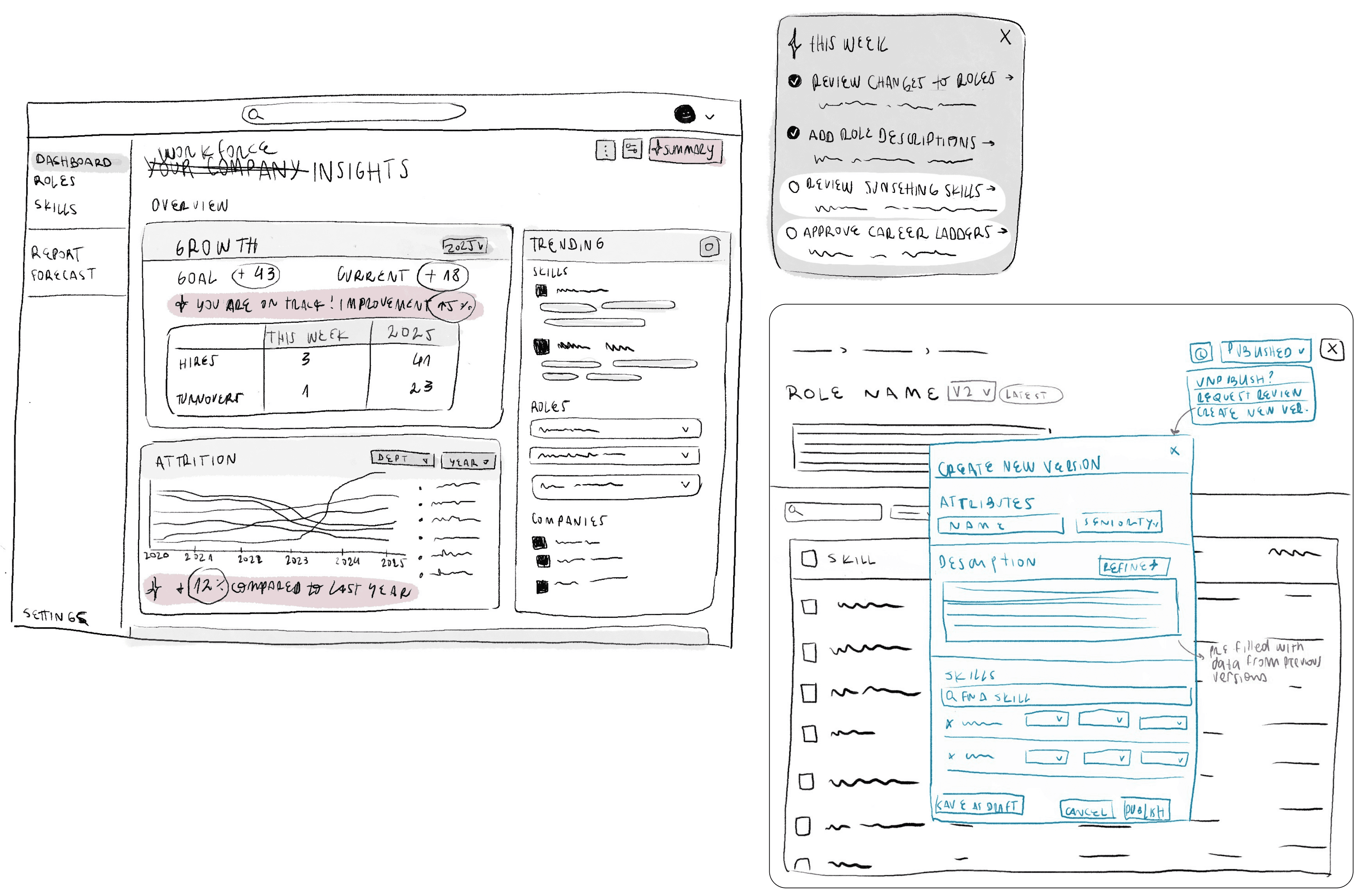
The big picture
Our goal was to create a skills-based, AI-powered Workforce Management Platform, seamlessly integrated with the Beamery suite and tailored to deliver dynamic experiences for our three archetype personas.
Job Architecture
The foundation for understanding and managing the skills an organization needs to thrive.
Insights Dashboard
Combines internal talent, candidate, and market data to deliver real-time insights that help People Managers optimize HR strategies.
Planning and Forecasting
Empowers C-suite Executives to anticipate workforce needs and create scalable, strategic HR solutions.
Proof of concept
Approach
We ideated the Job Architecture Management Platform as a POC to validate its core concept: helping People Managers and Collaborators manage roles and skills effectively. User interviews, testing, and feedback ensured we stayed on the right track.
Key insights
Line Managers and Heads of Department don’t prioritize Job Architecture maintenance, so the experience must be intuitive, with minimal entry barriers and support for self-onboarding.
Job Architectures often span hundreds of roles, making guidance and task automation essential for efficient management.
Changes to the Job Architecture directly impact workforce strategy, requiring a transparent sign-off process and cross-team alignment.
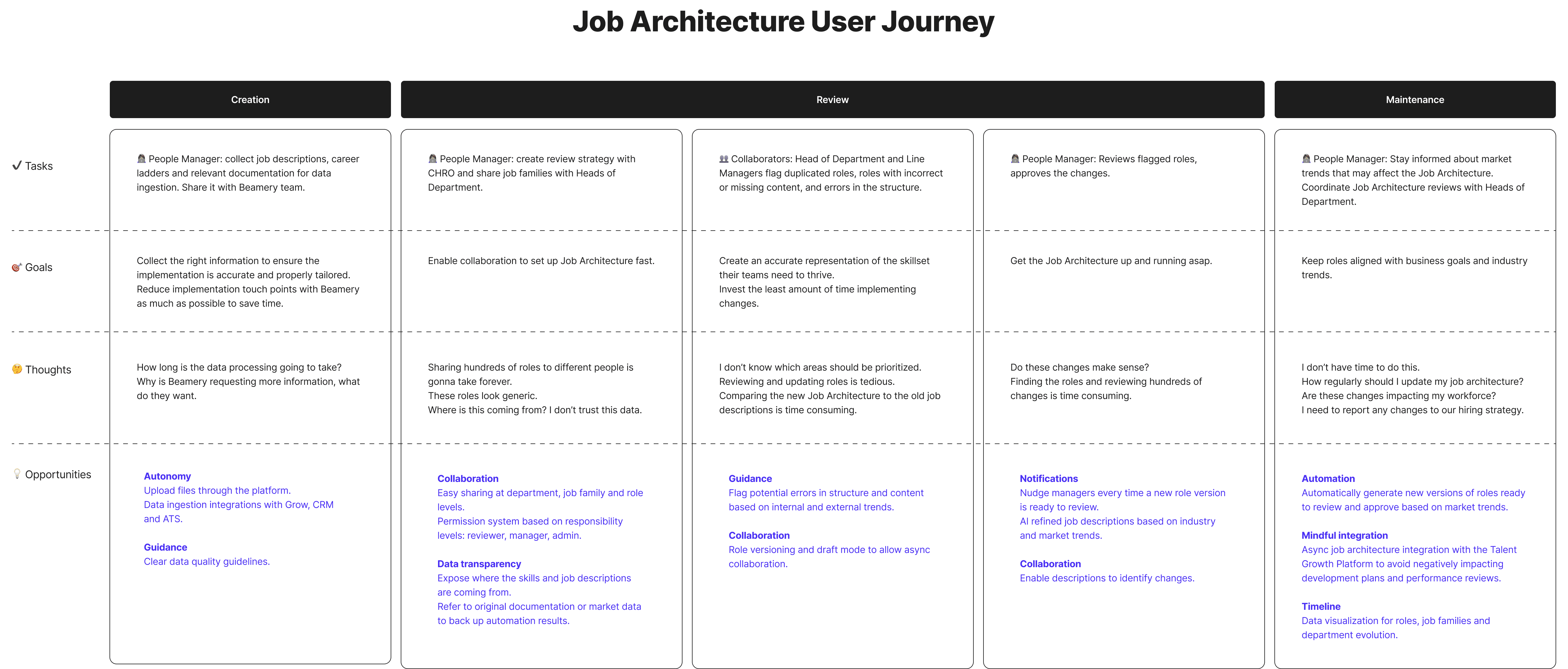
Solution design
Approach
We focused on delivering incremental value, prioritizing the most critical needs, and aiming for a beta launch to gather feedback quickly.
Throughout development, we conducted internal testing using Beamery’s own Job Architecture to assess data quality and performance.
MVP
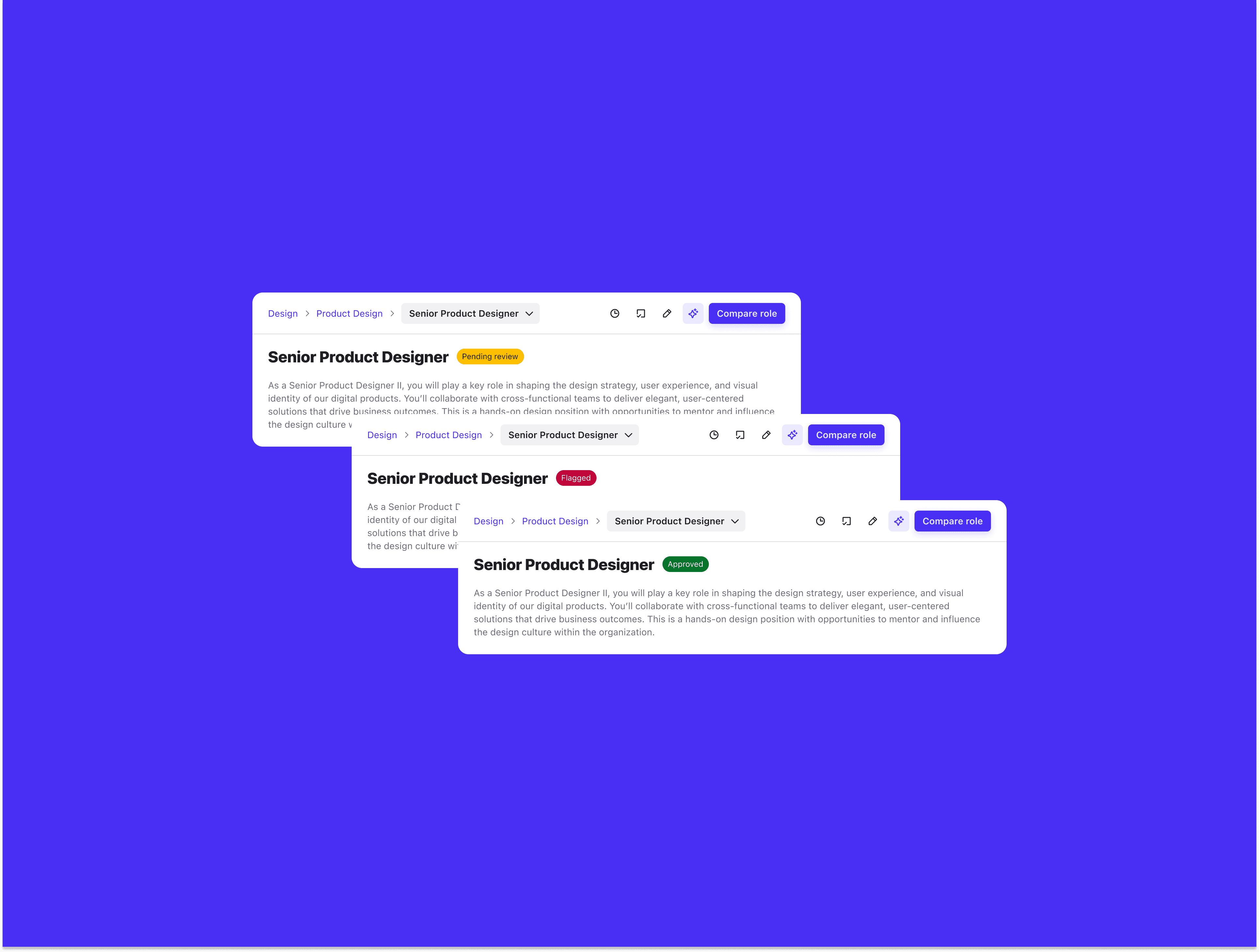
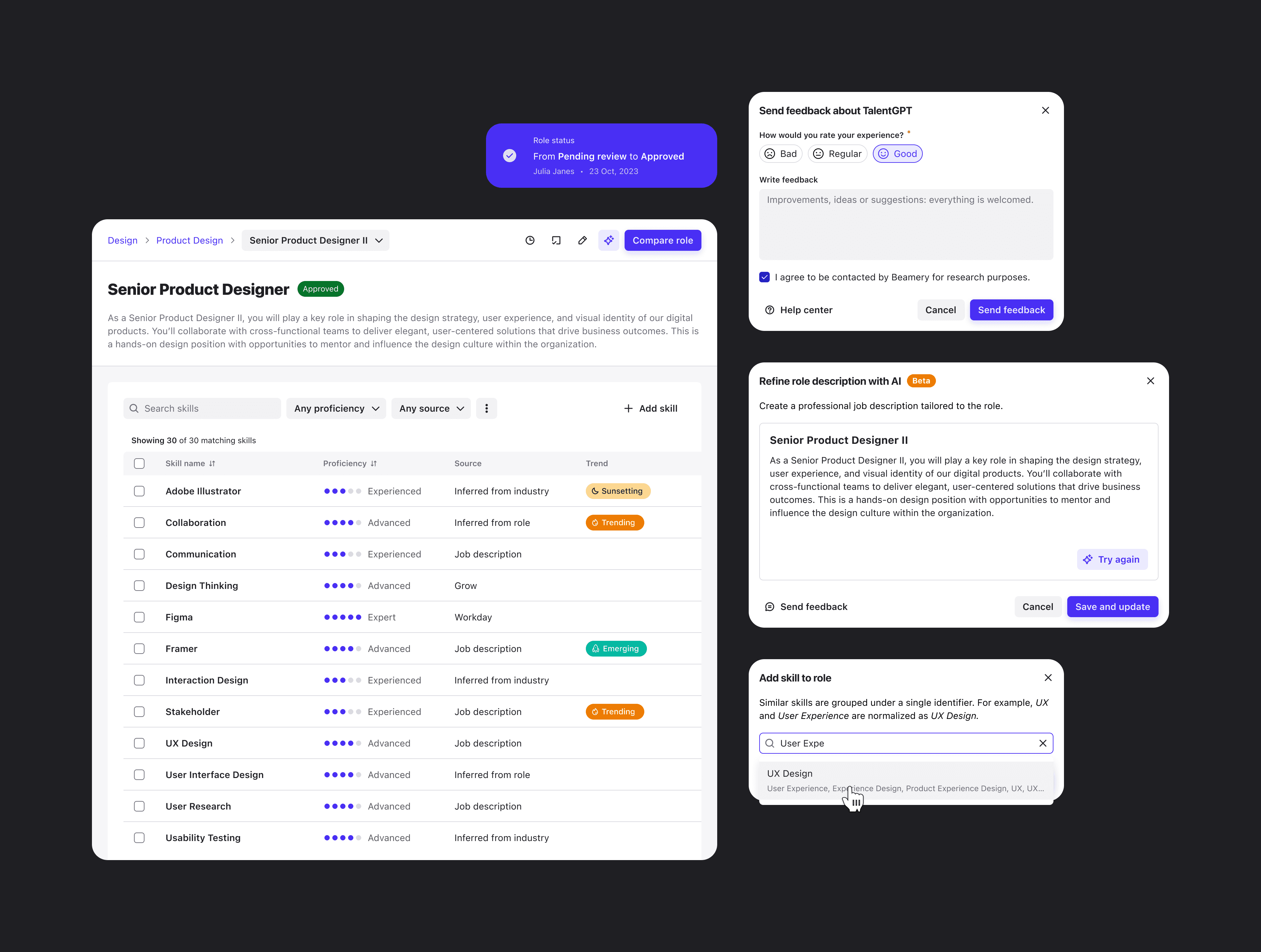
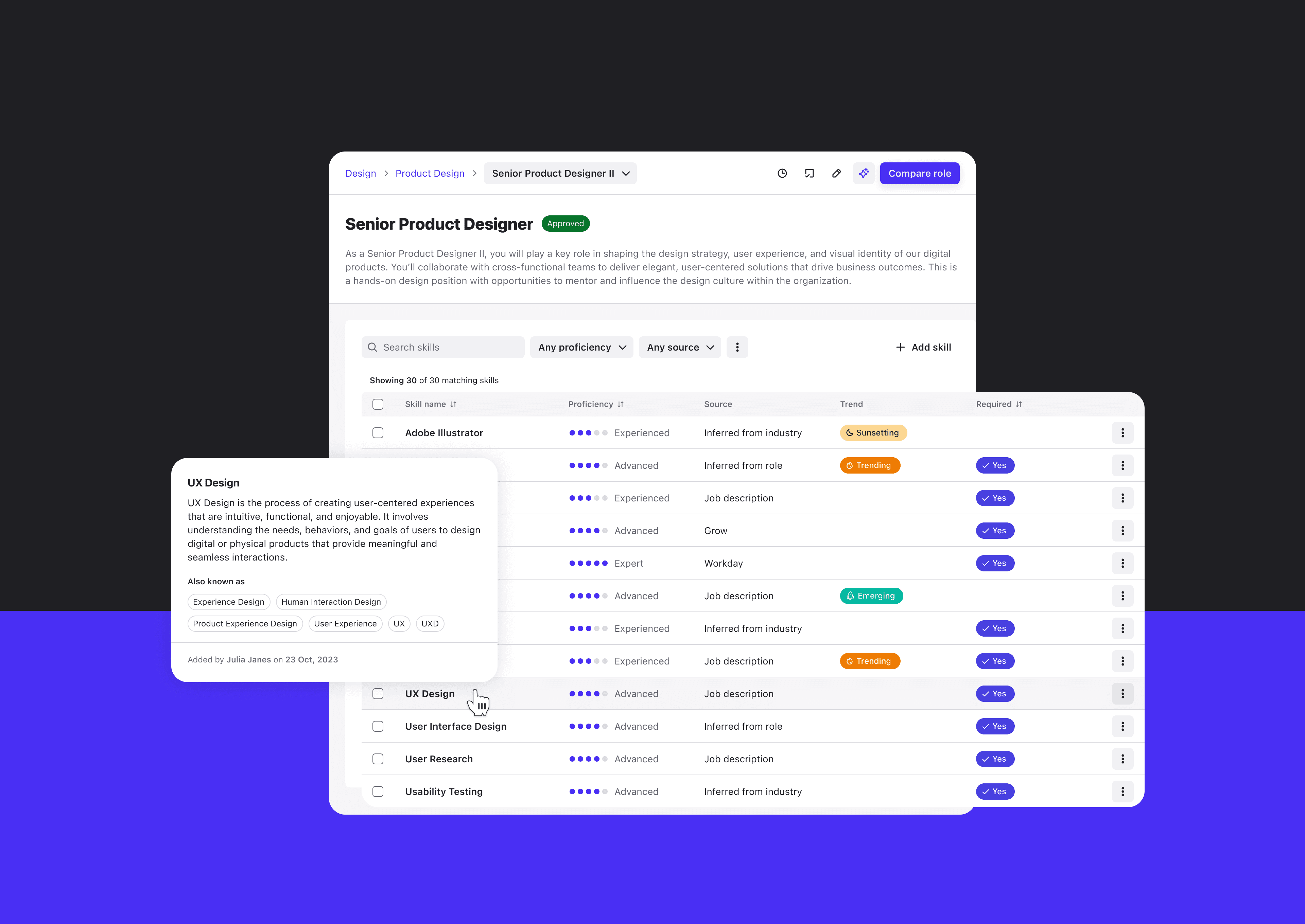
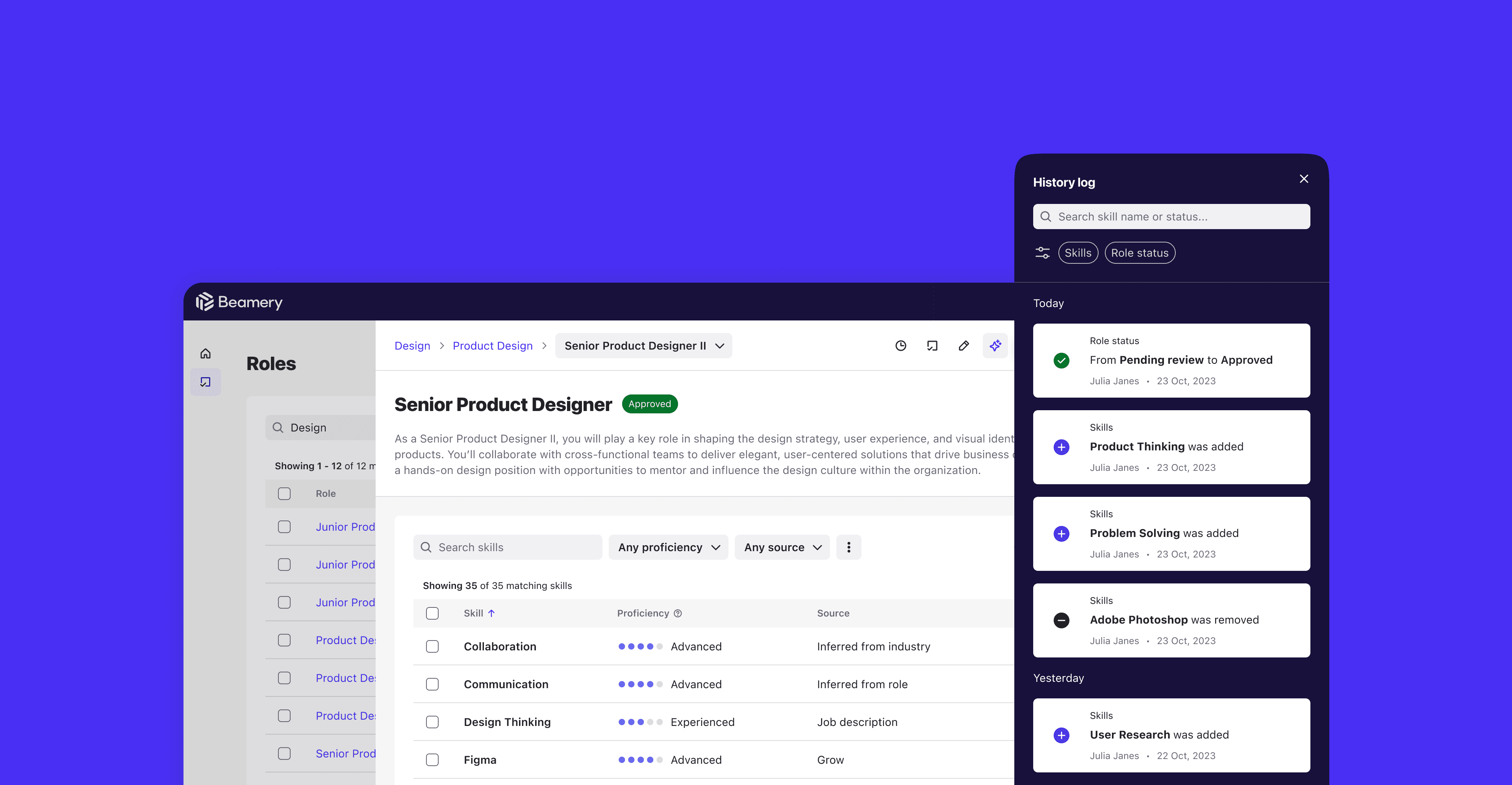
The initial release of Job Architecture centered on reviewing and updating roles and job families. Users could flag and share roles for review, modify skillsets, and mark them as approved. During setup, skills were normalized through Beamery’s data graph, ensuring consistency, reducing duplication, and streamlining the taxonomy. Skills were searchable by their primary name, company-specific terms, or variations. Later iterations introduced features like a history log and AI-powered refinements.