Skills Intelligence Platform
/24
Ceciilia Silvano
about
Building the foundation of an AI-powered skills-based Workforce Planning Platform for enterprise HR teams.
the challenge
The labor market moves faster than HR teams can keep up
We all know how fast the labor market is evolving today: new roles emerge and skills become obsolete faster than ever. For enterprise HR teams managing hundreds of roles across distributed offices, this creates an impossible coordination problem.
The consequences are expensive: losing talent due to unclear expectations, hiring for the wrong skills, and missing critical capability gaps until it's too late.
research
From vision to action
The workforce management platform had been discussed by leadership but never formally documented. We consolidated scattered information through stakeholder sessions (CPO, CEO, Product Directors, Recruiting Strategists), past HR executive interviews, and competitor analysis.
Key insights
User needs
Data centralization across fragmented systems
Cross-team collaboration at scale (tools like Google Sheets couldn't support enterprise workflows)
Guidance and automation to free HR teams for strategic work
Business opportunity
Capture revenue by addressing critical market demand
Boost net retention through continuous customer value
Enhance existing tools with integrated, skills-based solutions
Market gap
84% of leaders prioritize skills-first approaches
Competitors lack solid internal and market data integrations for strategic planning
Target users
We designed for three interconnected roles with different needs: C-suite strategists, People Managers coordinating cross-regional reviews, and line managers defining team requirements. The MVP focused on the latter two since they do the hands-on work.
Planning
Pillars of a skills intelligence platform
Job Architecture
The foundation. A structural framework that works as the single source of truth for understanding and managing organizational skills and the organizational blueprint for workforce planning.
Planning & Forecasting
Helping executives anticipate workforce needs and make proactive decisions.
Insights Dashboard
Combining internal talent data, candidate pipelines, and market intelligence for real-time strategic insights.
POC: Validating the foundation
We chose to start with Job Architecture deliberately. You can't build meaningful insights or forecasting without an accurate foundation and unreliable data.
We focused on validating that foundation through a proof of concept. Our goal: get Job Architecture right, prove people will use it, then expand.
Learnings
Intuitive or invisible
Line managers don't prioritize maintaining job architectures. The experience had to be self-explanatory with zero barriers to entry.
Guidance at a scale
Managing hundreds of roles manually is impossible. Users needed the system to flag issues, suggest priorities, and automate grunt work.
Transparency to build trust
Changes to job architecture directly impact hiring, development, and workforce strategy. Users needed complete visibility into where data came from and who approved what.
solution
Approach
Before jumping into solutions, we mapped the entire user journey across three key phases: Creation, Review, and Maintenance. This helped us identify where AI could accelerate work and where human judgment was critical.
We focused t he MVP on stages 2-4, validating the core review and approval workflow before building advanced maintenance features.
AI capabilities & human control
We used AI to handle the complexity of normalizing thousands of skills across different naming conventions, while keeping humans in control of decisions that affect their entire workforce.
What AI did
Skills normalization and classification across company terminology
Intelligent skill suggestions based on role context and industry patterns
Duplicate detection to reduce taxonomy redundancy
Where Humans controlled
Review and approval required for all AI suggestions
Override capability at any point in the workflow
Sign-off workflows for changes impacting workforce strategy
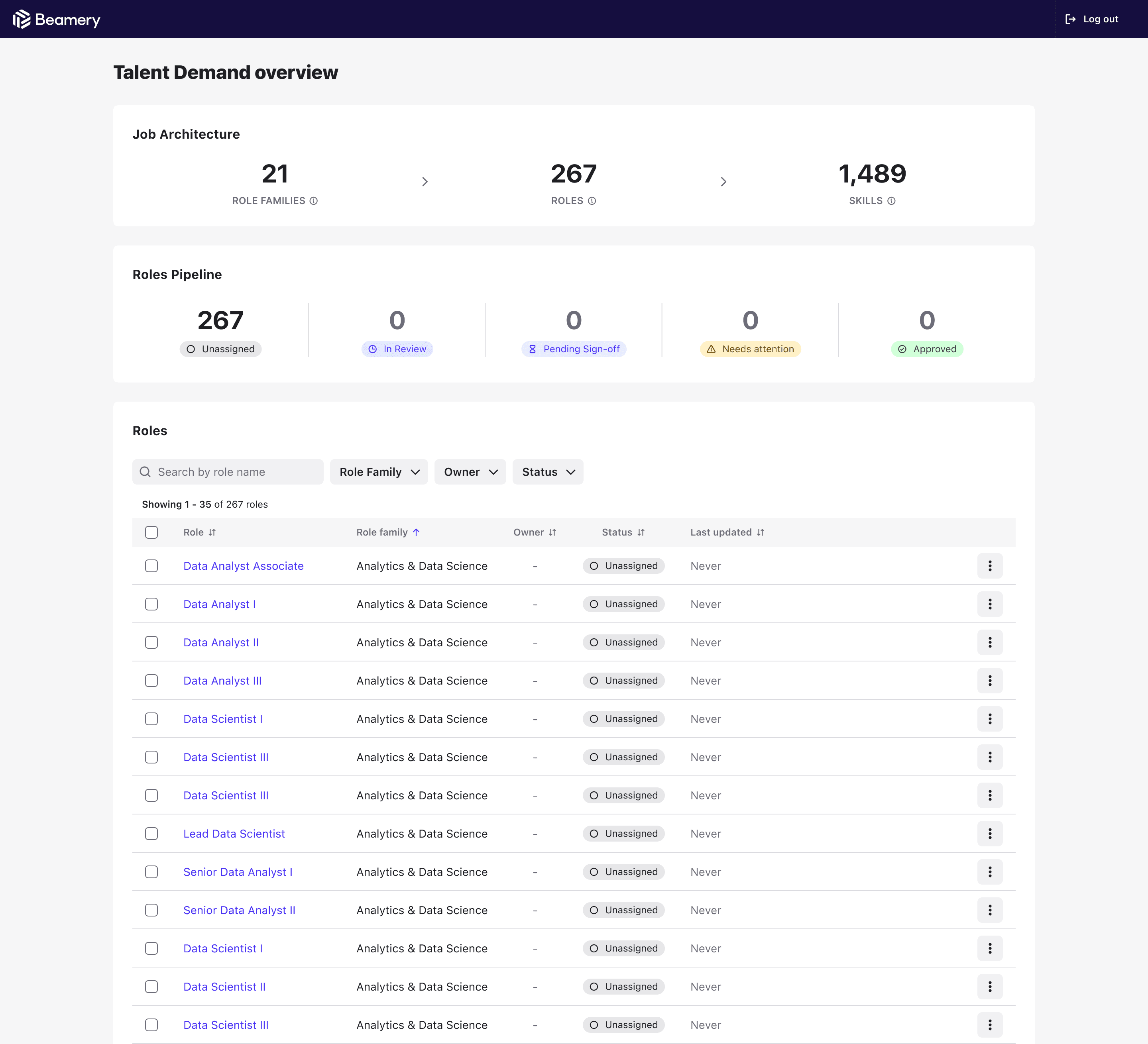
An actionable list
The original concept was a rich dashboard: workforce insights, skill gaps, trending capabilities. We said no to all of it for the MVP.
Instead, we shipped a unified list view of every role with status and function visible, no charts, no AI summaries. It covered the three things the MVP actually needed to deliver: discoverability, so you can find any role; visibility, so you can see its current state; and accountability, so you can see who's responsible. Everything else could come later.
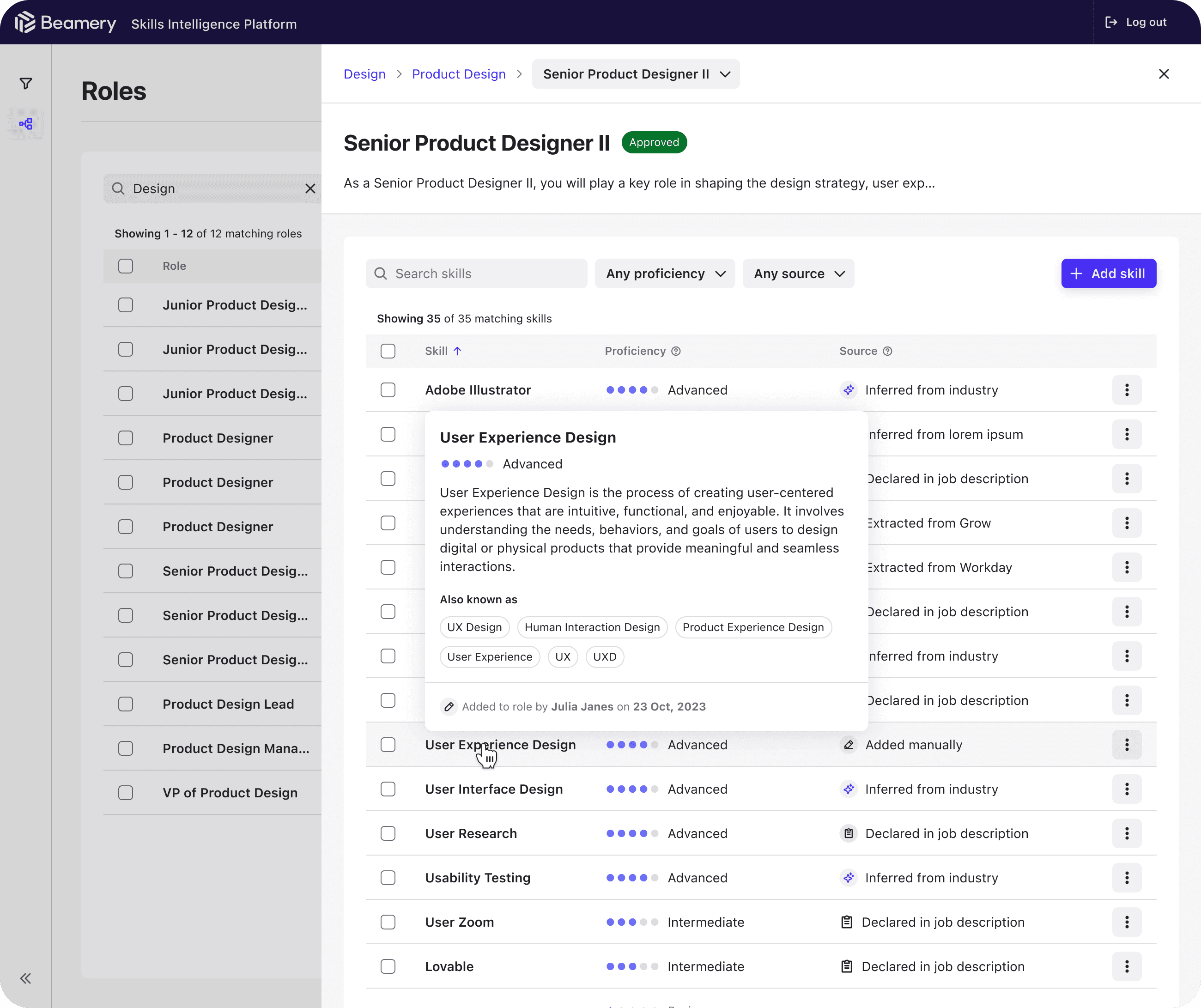
Reviewing AI suggestions
Collaborators review AI-suggested skills for each role. They see definitions, naming variations, and the data source. Users approve accurate skills or flag incorrect ones. Source transparency was a non-negotiable to build trust in the system.
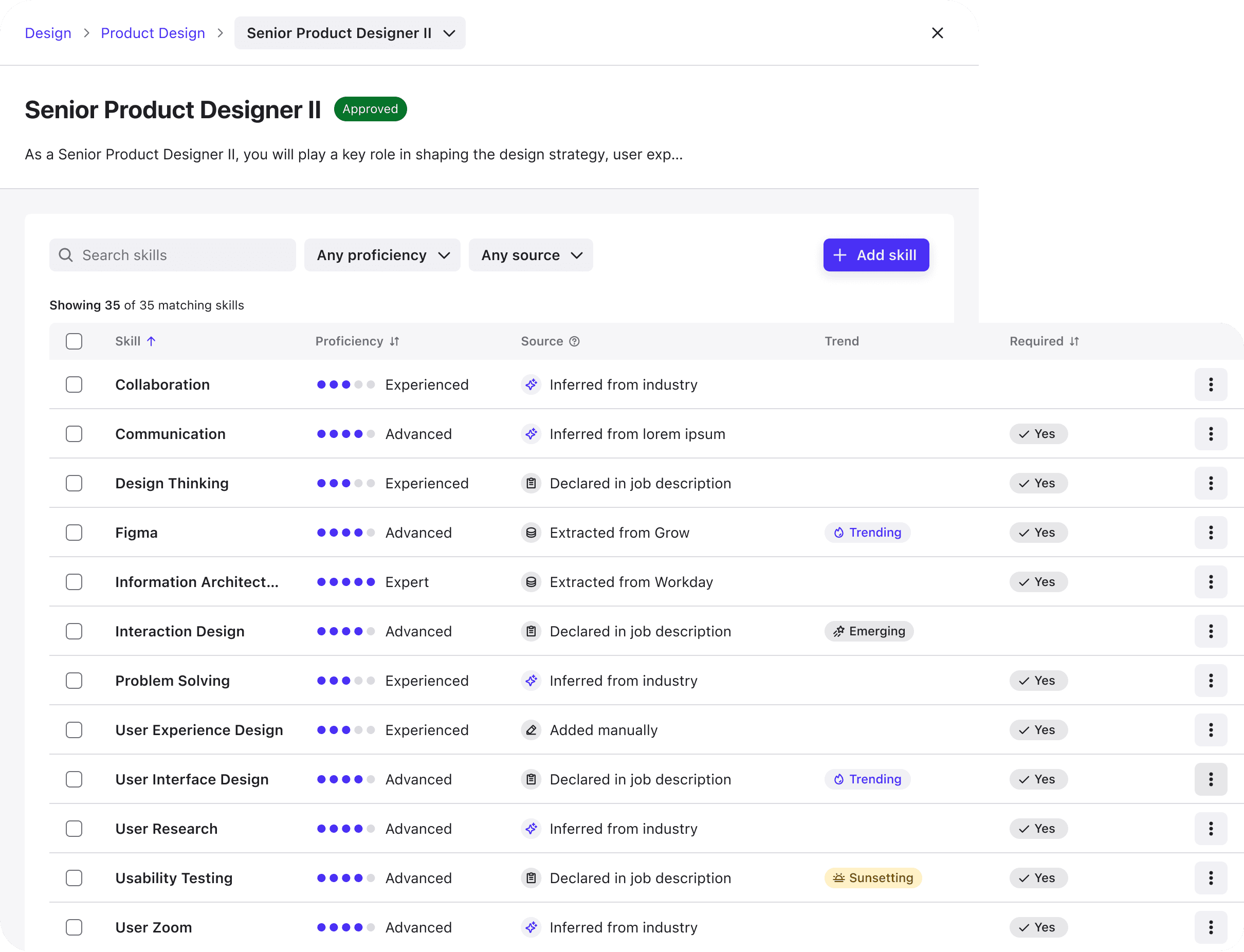
Managing roles at a scale
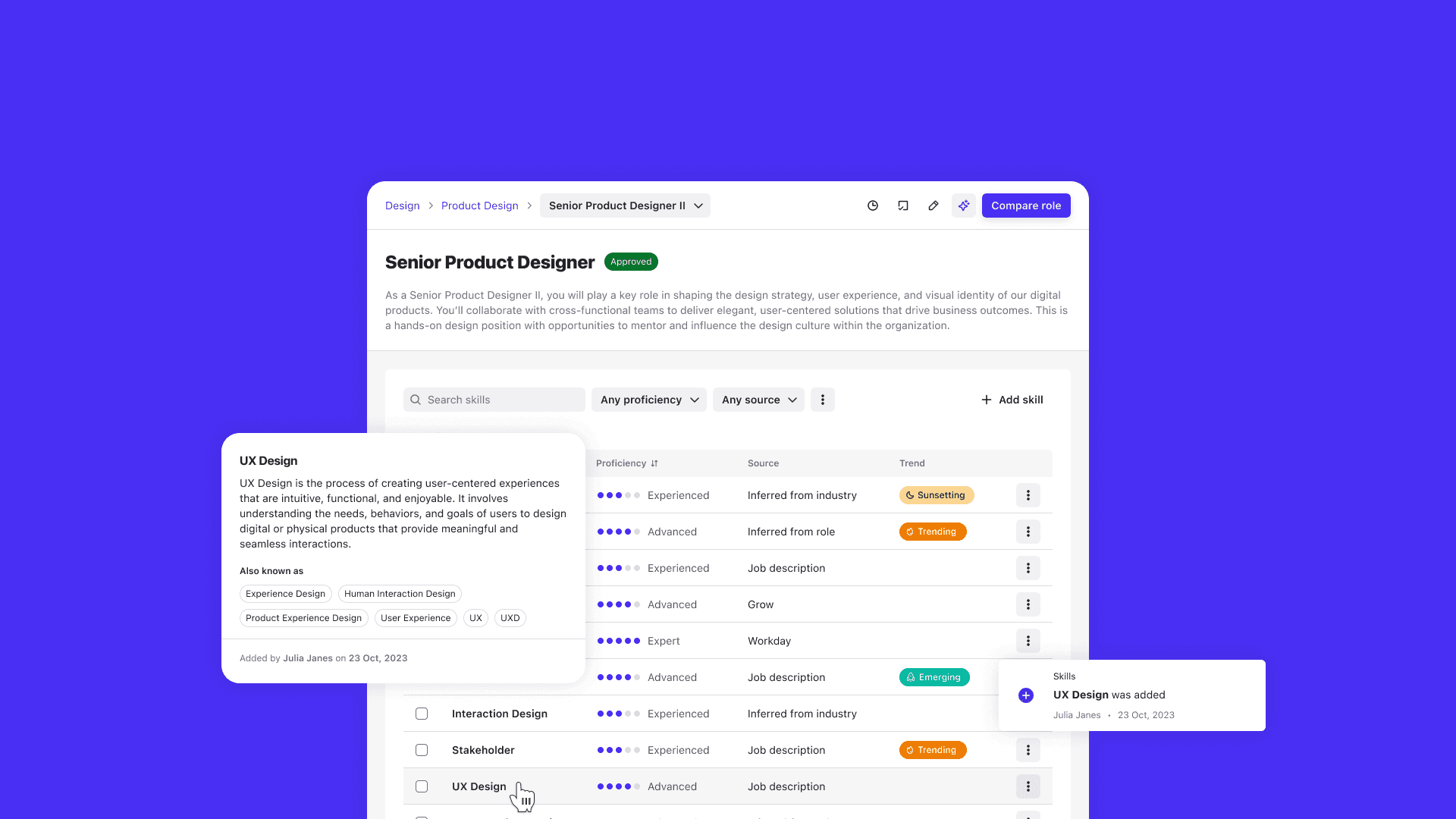
The full skills view shows how AI provides market intelligence while humans retain control. Trend indicators flag skills that are sunsetting, trending, or emerging based on market data, but users decide whether or not to update the skills base.
Adding skills
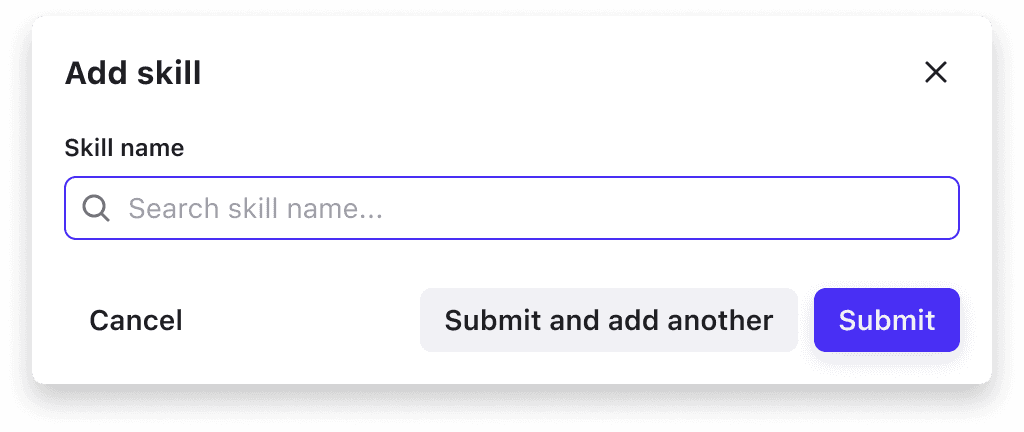
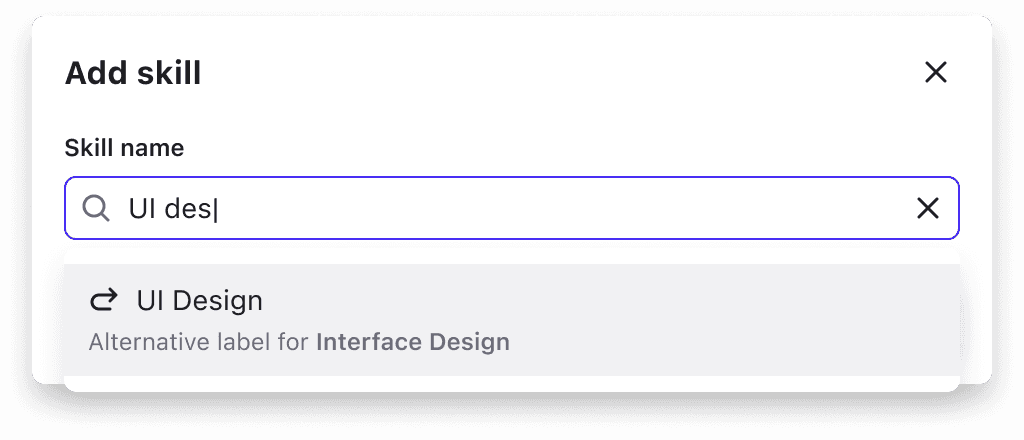
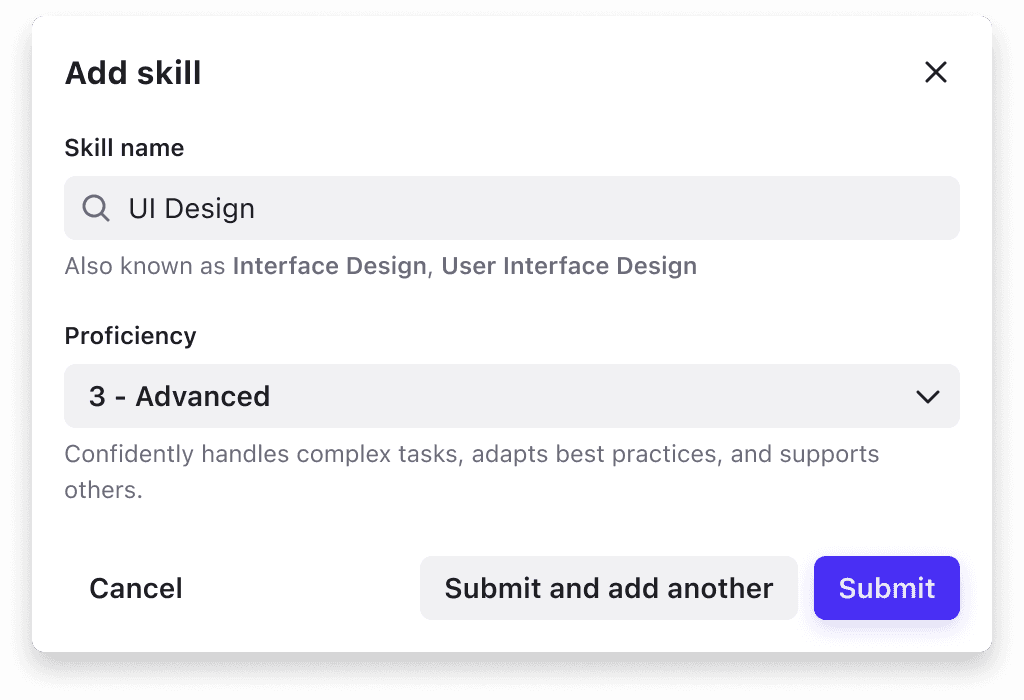
When adding skills, AI suggests matches from the unified taxonomy and shows naming variations automatically, eliminating duplicate entries, and users make the final call on proficiency.
impact
Key metrics
5 months from idea to first sale, first user live within 7 months.
$1M in sales pipeline within 6 months.
Became core part of Beamery's value proposition.
Positive feedback from beta users, reporting better collaboration and alignment across distributed teams.
Learning and iteration
We measured Task Success Rate for manual tasks like adding skills, and 79% showed we got the fundamentals right. Most errors came from users not understanding skill normalization at first, which we addressed in later iterations.
We also saw AI hallucinations in generated descriptions and occasional misclassifications early on. The ML team addressed these quickly, and our transparent sourcing meant users could catch and flag issues immediately. This actually built trust rather than breaking it.
Personal development
This project was my first 0-to-1 initiative. It sharpened my ability to navigate ambiguity, make strategic decisions in a very fast-paced environment, and align the needs of diverse stakeholders.
The biggest challenge was moving forward confidently when nothing was defined. I learned to make reversible decisions fast, validate assumptions continuously, and ship to learn rather than ship to finish.