CRM Candidate Profile
/23
Ceciilia Silvano
about
Redesigned Candidate Profile in Beamery CRM to meet enterprise accessibility standards while introducing AI-powered intelligence that made it recruiters' trusted single source of truth.
the challenge
Broken trust
Beamery's candidate profile sat at the heart of recruiting workflows, but users didn't trust it. They'd open LinkedIn and resumes to verify data because Beamery's profile was unreliable and unreadable. Worse, key clients demanded AA accessibility compliance or they'd leave.
The profile was built on legacy tech that couldn't support modern standards. Layouts broke with long text. Everything looked equally important. Users couldn't scan quickly or navigate with keyboards.
We had to rebuild it or lose major clients.
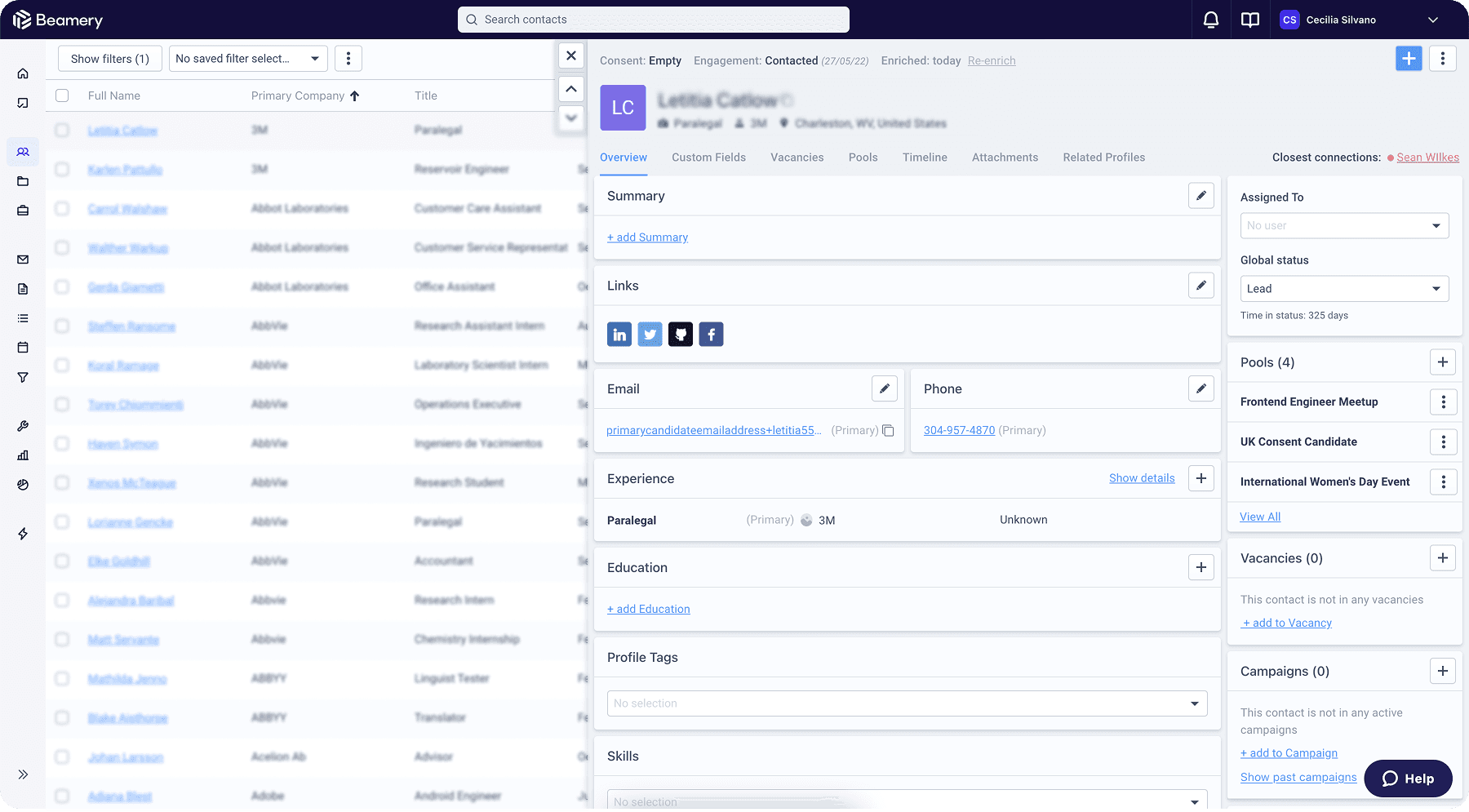
Legacy CRM Profile
research
What users actually needed
Recruiters and sourcers told us they couldn't rely on Beamery.
Resume parsing failed to capture complete candidate data
Data-dense profiles were impossible to scan
They couldn't quickly answer: Is this candidate relevant? What makes them different? Do they fit any open roles?
The profile needed to become accurate, transparent, actionable, and accessible, or we'd keep losing users to LinkedIn.
Our approach
We optimized for fast screening and trust-building through three core principles:
AA compliance
Migrate to new design system with proper contrast, keyboard navigation, screen reader support
Clear hierarchy
Scannable information, progressive disclosure
Trustworthy data
Show sources and enable user control
ideation
Information Architecture
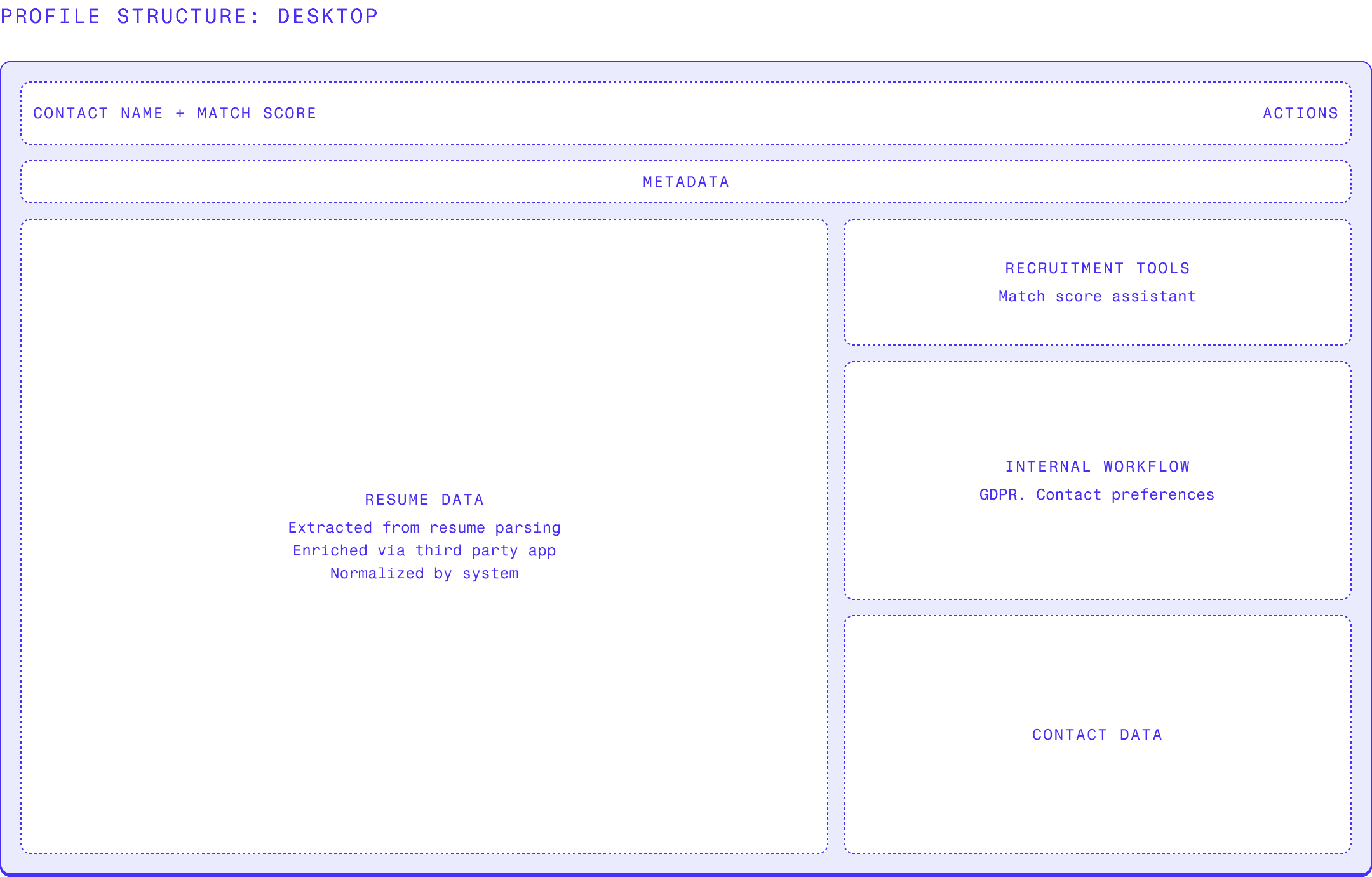
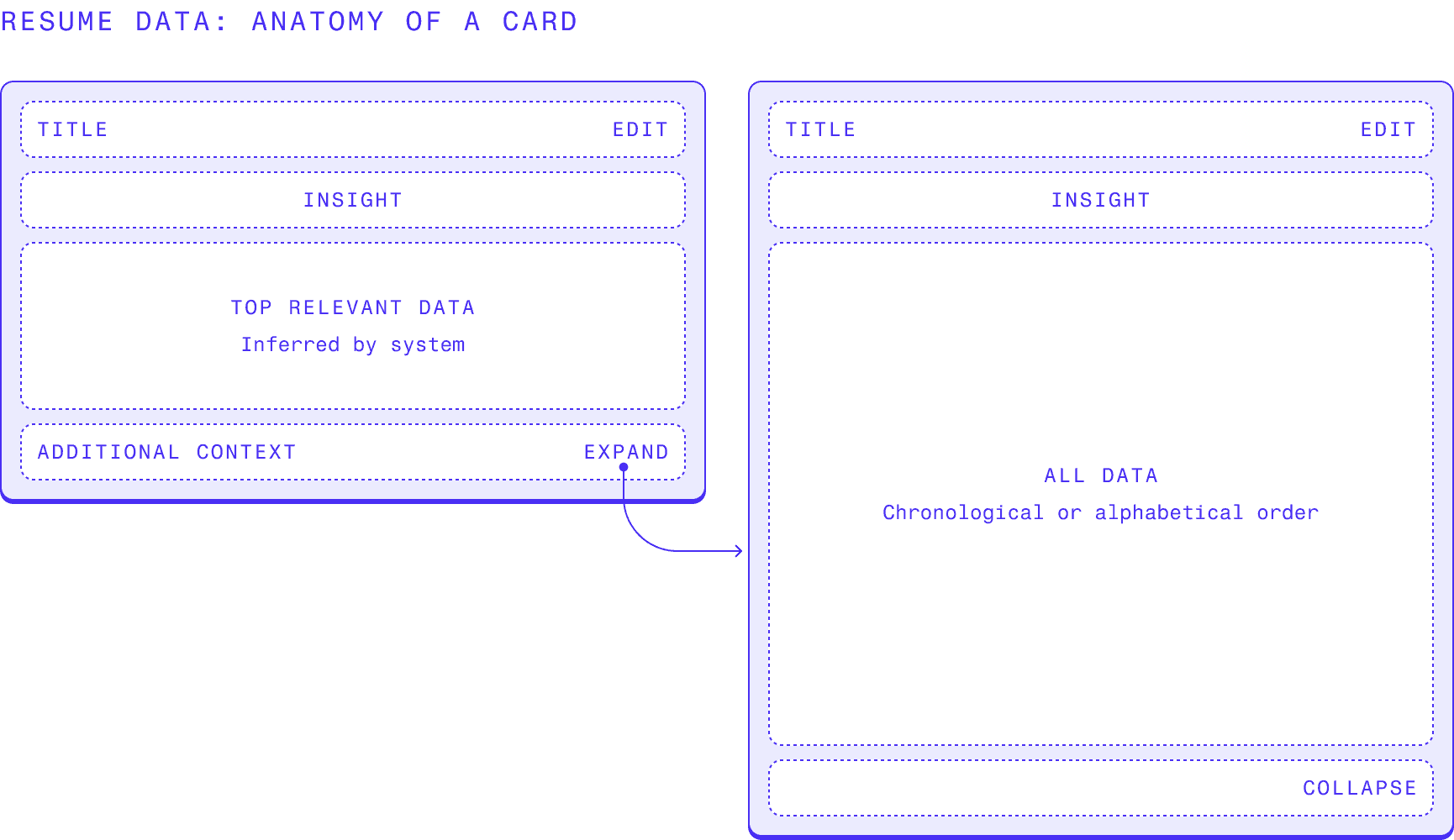
I restructured the profile to surface relevant information first.
Progressive disclosure
Dense data hidden behind expandable sections to reduce cognitive load
AI-powered data selection
System highlights the most relevant experience and skills based on candidate tenure, industry, and role context
Design System Implementation
This was one of the first features to fully implement Beamery's new AA-compliant design system. I established reusable patterns for data-dense layouts, progressive disclosure components, and accessible collapsible sections. These patterns became the foundation for redesigning other platform areas.
ai intelligence
Introducing AI Intelligence
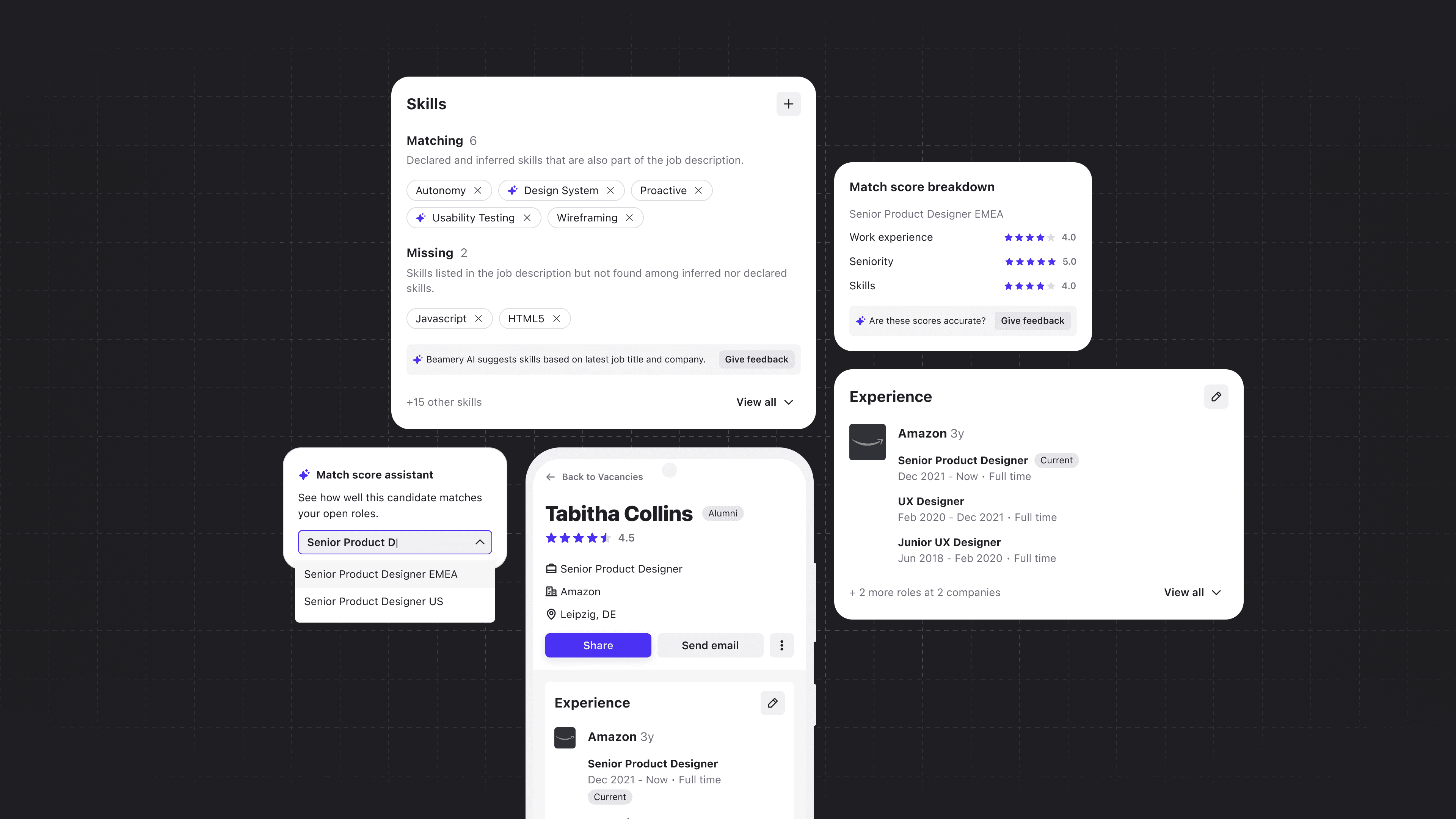
The redesign introduced AI features designed to accelerate workflows while maintaining user trust.
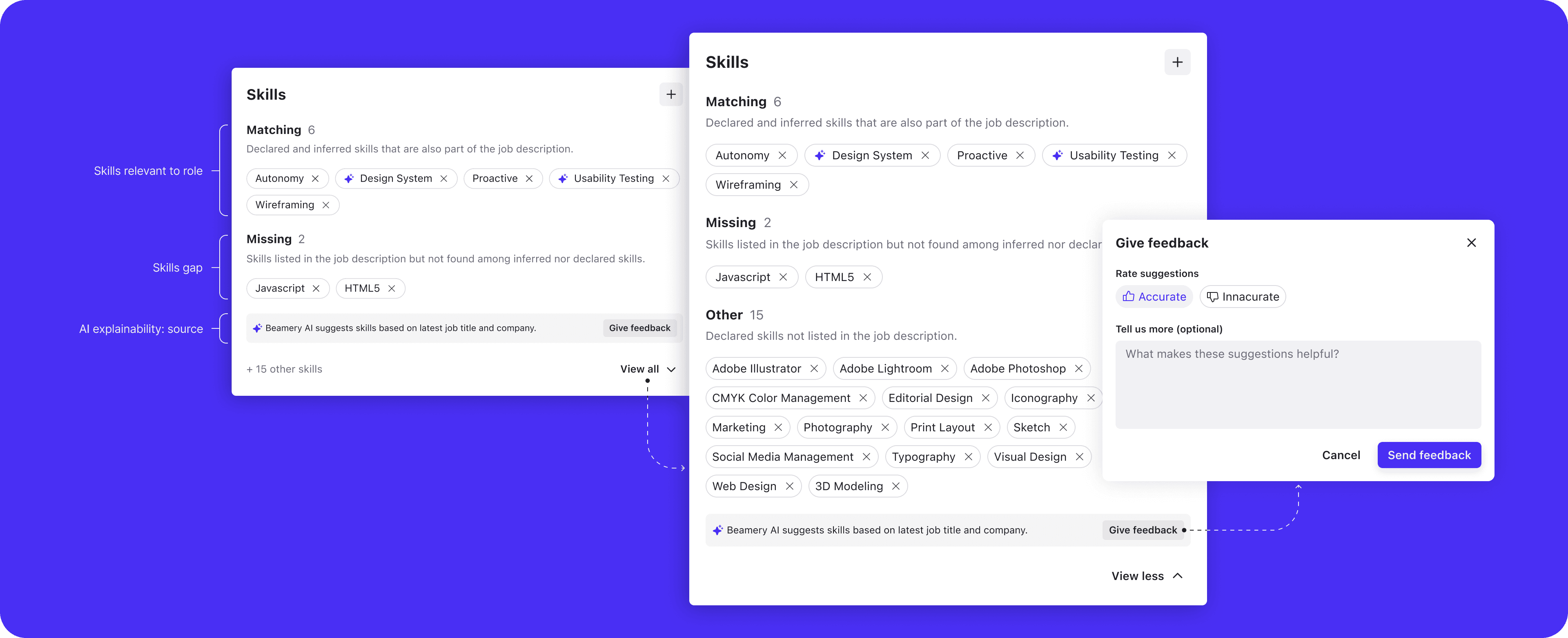
AI-suggested skills
System analyzes work experience and suggests relevant skills
Skills declared by the candidate in their resume and LinkedIn profile are clearly distinguished from skills inferred with AI
"Matching" and "Missing" skill categories help recruiters quickly identify strengths and knowledge gaps
Users can keep, delete, or disable suggestions entirely
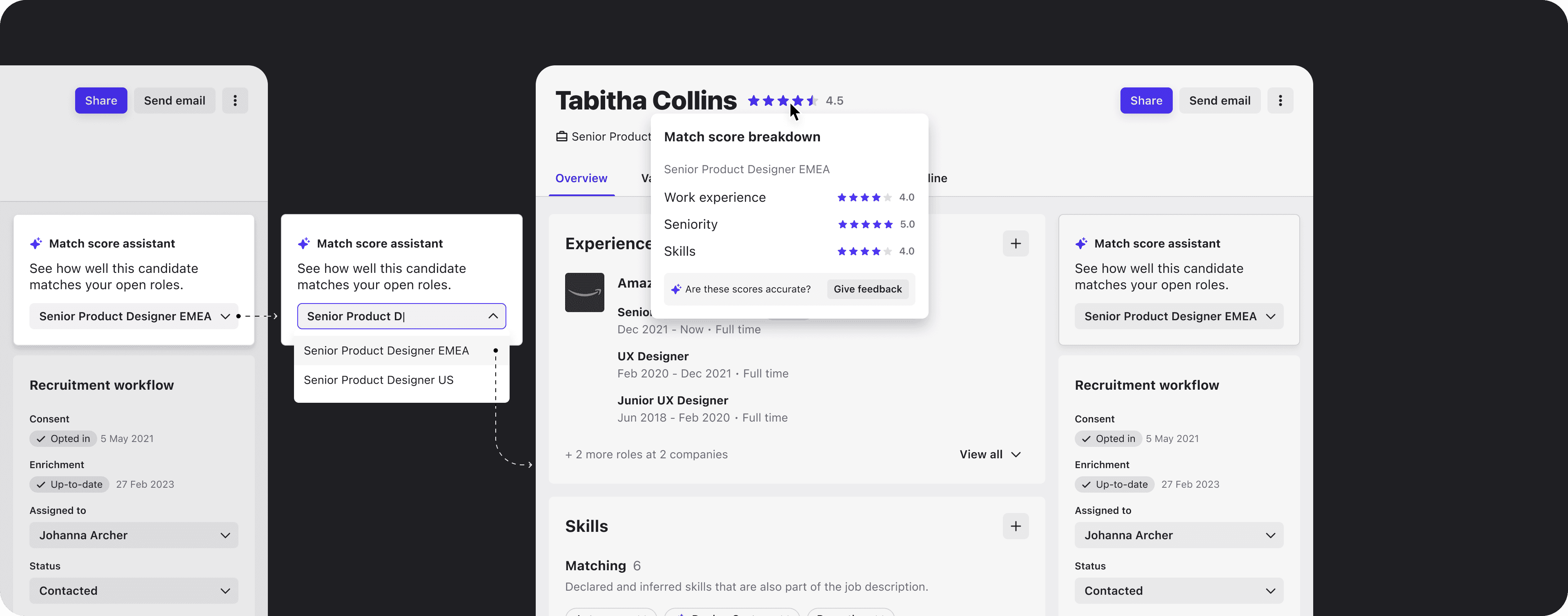
Match score
Compares candidate profile to ideal profiles for open roles
Transparent calculation: users see exactly why candidates match (title relevance, seniority, skills)
Can be disabled if teams prefer manual assessment
Why transparency mattered
We needed users to stop opening LinkedIn and resumes. That required making Beamery more accurate and transparent than those sources by showing not just what the data said, but where it came from. If users couldn't verify the AI's work, they'd never trust it enough to make it their single source of truth.
solution design
The new experience
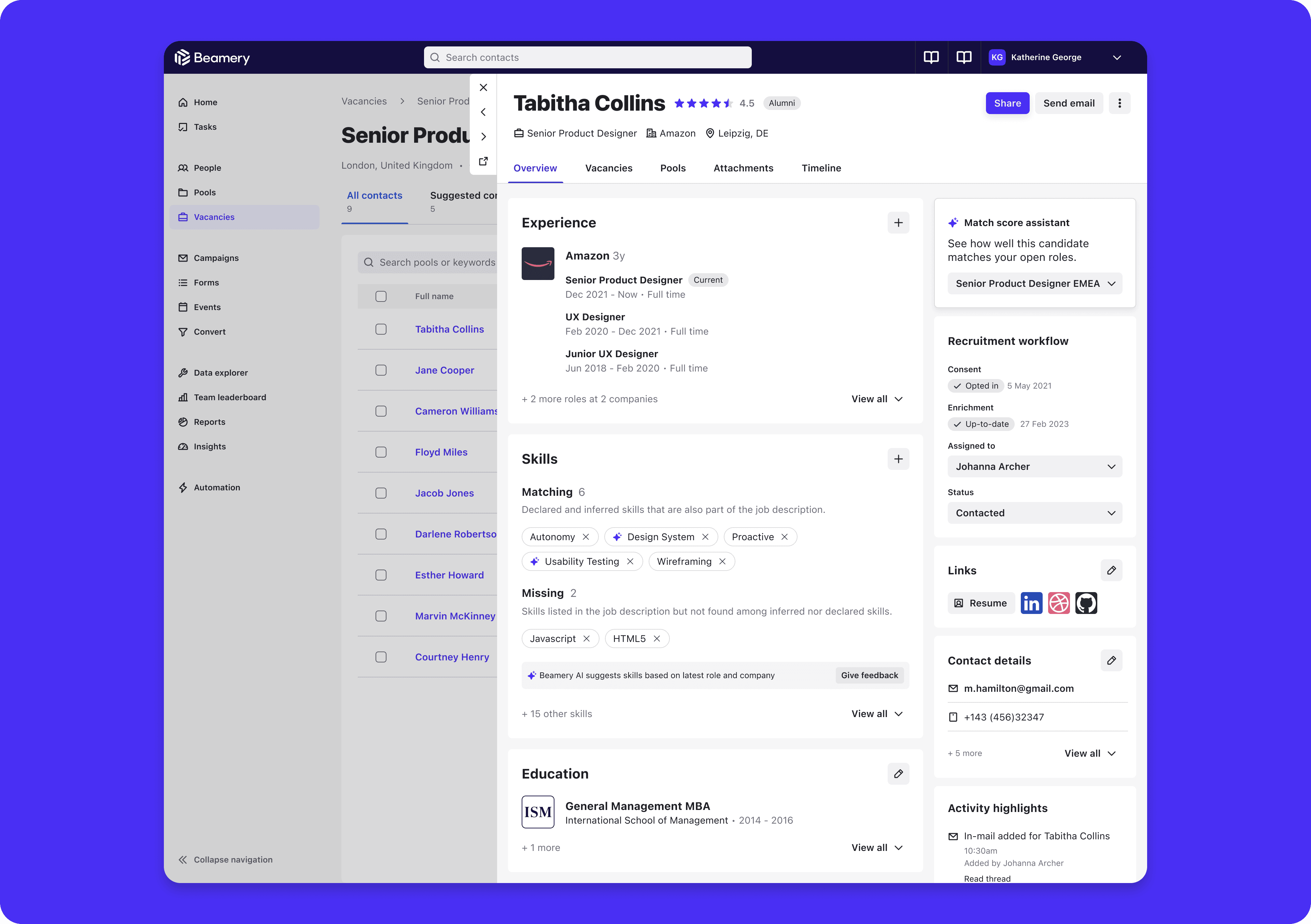
The redesigned profile balanced two critical needs: helping recruiters assess candidates quickly while maintaining data integrity.
The desktop version offers a full-featured view with progressive disclosure, while mobile introduced core features focused on-the-go candidate screening.
impact
Key metrics
AA compliance unlocked
Met accessibility requirements for key enterprise clients with strict DEI protocols, achieving 100% contract renewals.
Eliminated technical and UX debt
Migrated from legacy technology to modern design system foundation in 3 months, establishing scalable patterns now used across the platform.
Significant increase in feature usage
The profile became easier to navigate, more trustworthy, and fully accessible, driving increased feature engagement and user satisfaction.